
Patula pine
Pinus patula Schiede ex Schltdl. & Cham.
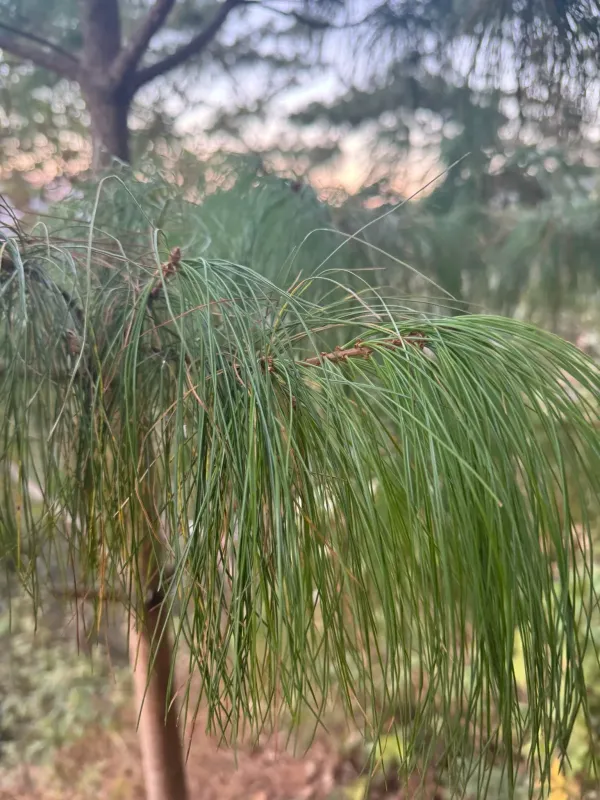
Description
Sowing dates
Sowing of Pinus patula seeds in nurseries is usually carried out in the spring when the soil temperature reaches 10–12°C. In nature, seeds are dispersed after forest fires or when cones reach full maturity and open gradually.
To speed up germination, seeds are often subjected to cold stratification for 30–60 days at approximately 4°C. This helps to increase the germination rate and synchronizes seedling emergence in plantations.
Sowing is performed in prepared beds or containers with drained substrate. The planting depth for seeds should not exceed 0.5–1 cm, as seedlings are sensitive to soil depth.
A crucial factor during sowing is ensuring sufficient light, as Pinus patula is extremely photophilous at all stages of its development. Densely packed seedlings lead to rapid elongation and reduced immunity.
Regular watering in the first months of the seedlings' life is critical, but waterlogging should be avoided as it can cause root rot.
Growing requirements
Patula pine belongs to the Pinaceae family and naturally occurs in the mountainous regions of Mexico at altitudes between 1800 and 3000 meters. The crop prefers a mild, humid climate without extreme frosts.
The tree is demanding regarding soil depth and aeration. The best growth performance is observed on deep, well-drained loams with acidic or neutral pH levels.
The plant does not tolerate prolonged droughts or strong winds that can damage fragile branches. In cultivation, it is important to provide protection against severe frosts, as young trees are sensitive to low temperatures.
The optimal annual precipitation for successful reforestation with this species ranges from 1000 to 2000 mm. The crop shows rapid adaptation in moderately tropical and subtropical regions worldwide.
Besides climatic factors, the plant needs freedom from shading by taller trees, as it is a classic pioneer species with a pronounced need for sunlight.
Yield
Pinus patula is highly valued in forestry for its very fast growth rate, allowing it to be used in commercial plantations to produce timber in short rotations.
Depending on the quality of the site and the intensity of management, biomass yield can reach 20–30 cubic meters per hectare per year. This makes it one of the most productive conifer species in southern latitudes.
The primary use of the wood is for the pulp and paper industry, plywood production, packaging materials, and general-purpose construction lumber.
The timber is characterized by moderate density, ease of processing, and acceptable strength properties, ensuring high market demand for plantation-grown products.
Upon reaching the age of 15–25 years, plantations are ready for the first commercial harvest, ensuring high economic efficiency for forestry projects.
Main diseases and pests
Key threats include fungal diseases such as needle cast and various types of needle spots, which develop in conditions of high humidity and poor crown ventilation.
Pests, including sawflies and certain bark beetle species, can cause significant damage to young plantations, leading to tree weakening and eventual mortality.
Root rot is a major issue on waterlogged soils, so prevention includes mandatory drainage control at the plantation site.
Forest fires pose the greatest danger to this pine species due to the high content of resinous substances in the needles and thin bark in young trees.
- Preventive fungicide treatments.
- Sanitary logging of affected specimens.
- Monitoring of insect pest populations.