
Egg-cone pine
Pinus oocarpa Schiede ex Schltdl.
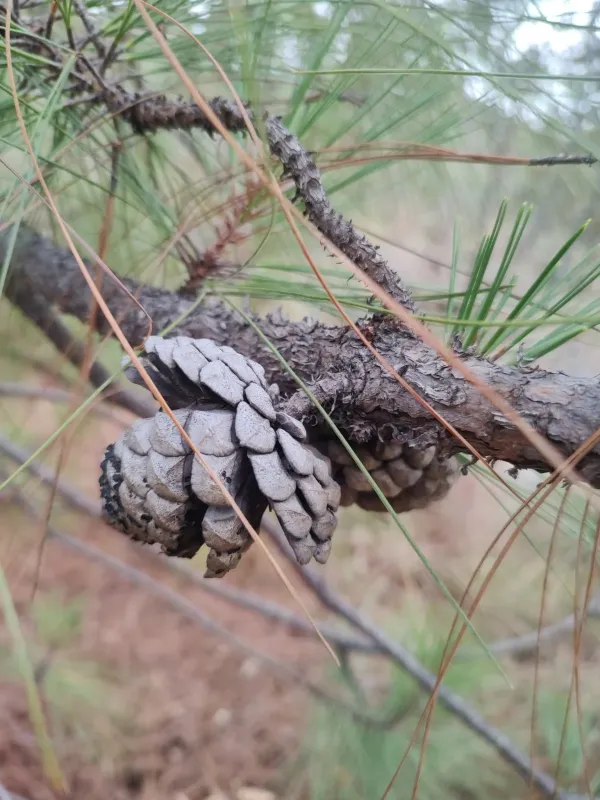
Description
Sowing dates
Sowing of Egg-cone pine (Pinus oocarpa) seeds is typically carried out at the beginning of the rainy season to ensure optimal soil moisture for seedling establishment.
Seeds often require pre-treatment, including stratification or soaking, to improve germination rates significantly when managing large-scale tree nurseries.
Containerized planting is the preferred method for this species to protect the delicate root system during the sensitive transplanting phase into the field.
Planting density is adjusted based on the intended use of the wood, usually ranging from 1,100 to 1,600 trees per hectare to promote healthy forest growth.
Effective site preparation before sowing or planting is essential to remove competing vegetation and provide the seedlings with sufficient early access to nutrients.
Growing requirements
The Egg-cone pine belongs to the Pinaceae family and is native to high-altitude regions of Central America, where it thrives in subtropical climates.
It shows remarkable adaptability to various soil types but performs best in well-drained acidic soils that do not suffer from prolonged waterlogging.
This species is highly valued for its drought tolerance, making it an excellent candidate for reforestation in regions with seasonal rainfall patterns.
As a light-demanding species, it requires full sun exposure to maintain vigorous growth, especially during the early stages of development.
Growth is significantly enhanced by the presence of specific soil fungi, which form symbiotic relationships with the roots to aid in nutrient absorption.
Yield
The productivity of Pinus oocarpa is highly regarded in tropical forestry due to its rapid biomass accumulation even on relatively poor soils.
The wood is known for its structural integrity, making it a reliable resource for construction, carpentry, and the manufacture of high-quality furniture.
Sustainable forest management practices can result in significant timber yields, with rotations typically lasting between 25 and 40 years for commercial harvest.
The resin production of the Egg-cone pine provides an additional economic benefit, allowing for sustainable harvesting of non-timber forest products.
Yield metrics are closely monitored to ensure that forest health is maintained while providing a steady supply of wood to the industrial sector.
Main diseases and pests
Fungal diseases, particularly those affecting the needles and terminal buds, can be a major challenge in nurseries with poor ventilation or high humidity.
Bark beetles and other wood-boring insects represent a serious threat, especially to plantations that have been stressed by drought or improper management.
Invasive weed competition during the first few years after planting can severely restrict growth and significantly increase mortality rates among saplings.
Forest fires are a critical risk factor, necessitating the implementation of firebreaks and strict fire management protocols across all plantation areas.
Early detection of pest outbreaks is vital for maintaining the economic viability of the stand and preventing the spread of diseases between individual trees.
Harvesting
Harvesting operations are planned based on the growth cycle of the stand, focusing on extracting mature trees that meet specific diameter requirements.
Mechanized harvesting tools are used to ensure safety and precision, allowing for efficient removal of timber while protecting the remaining healthy stock.
On-site sorting of logs helps categorize the harvest for different industrial applications, ranging from sawtimber to pulpwood for paper production.
Responsible harvesting includes the proper disposal or repurposing of forest residues to reduce fire hazards and support long-term soil fertility.
Efficient logistics and transport scheduling from the forest to the processing facility ensure that the timber is delivered in optimal condition for industrial use.