
Kesiya Pine
Pinus kesiya Royle ex Gordon
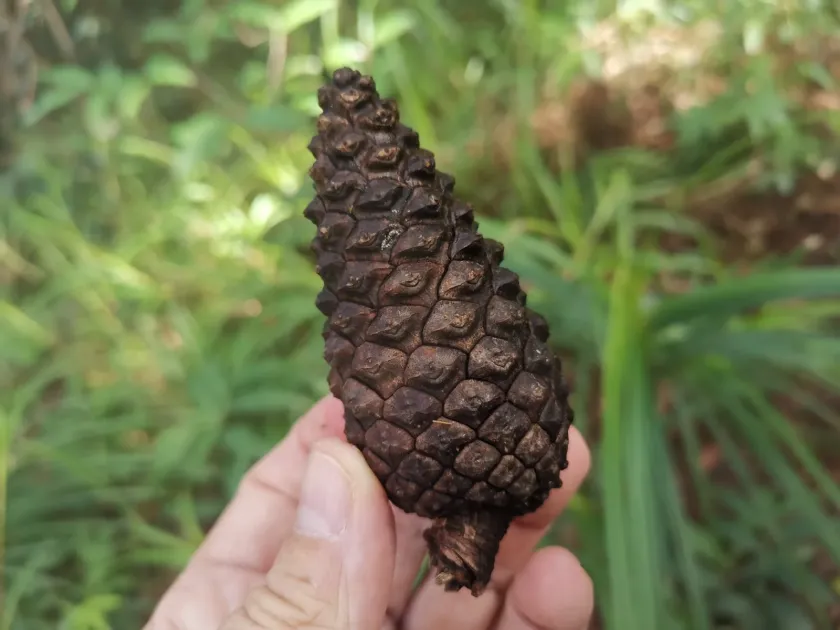
Description
Sowing dates
Kesiya pine seeds are typically collected from mature cones, which require sun-drying or kiln treatment to release the winged seeds effectively.
Sowing should be performed in nursery trays using a well-draining medium. The addition of mycorrhizal inoculants is highly recommended to ensure healthy seedling development.
Seedlings are nurtured in nurseries for several months until they reach a robust size, usually around 25 to 30 centimeters in height, before field planting.
Field planting is ideally scheduled at the onset of the rainy season to allow the root systems to establish themselves before the onset of any dry periods.
Standard plantation spacing ranges from 1,100 to 1,600 stems per hectare, ensuring that every tree has adequate access to sunlight and soil nutrients.
Growing requirements
Pinus kesiya is native to the tropical and subtropical regions of Southeast Asia, thriving at elevations between 500 and 2,000 meters above sea level.
The species prefers well-drained, acidic soils and can adapt to various soil textures, including sandy and rocky substrates common in mountainous areas.
Being a light-demanding species, Kesiya pine requires full sun exposure to reach its maximum growth potential; overcrowding should be avoided.
It displays remarkable resilience to high temperatures and moderate drought, though consistent rainfall is beneficial for sustaining optimal growth rates.
Proper site preparation, including weeding and soil loosening, is essential during the initial stages to prevent competition with faster-growing grasses and shrubs.
Yield
As a fast-growing conifer, Kesiya pine is highly valued in plantation forestry, often achieving harvestable timber sizes in a relatively short rotation cycle.
The wood is versatile, making it suitable for structural timber, pulpwood, furniture manufacturing, and various construction applications.
Under favorable management conditions, the annual wood increment is significant, offering high yields of biomass per hectare over the forest lifecycle.
In addition to timber, the species is historically significant for its oleoresin production, providing a secondary income stream for forest managers.
Strategic thinning cycles help maximize the production of high-quality sawlogs while maintaining the health and vigor of the remaining stand.
Main diseases and pests
Bark beetles constitute a major threat to these plantations, particularly attacking trees that have been stressed by environmental factors like prolonged droughts.
Fungal diseases affecting the needles and roots can thrive in high-humidity nursery environments, necessitating strict sanitation protocols.
Wildfires are the most destructive hazard for Kesiya pine, as the species is sensitive to fire damage during its juvenile and pole stages.
Defoliating insects can cause significant losses in foliage biomass if left unmonitored, potentially impacting the overall growth rates of the forest.
Integrated pest management, including the removal of dead or diseased timber, is vital to prevent the spread of infestations throughout the plantation.