
Sand pine
Pinus clausa (Chapm. ex Engelm.) Vasey ex Sarg.
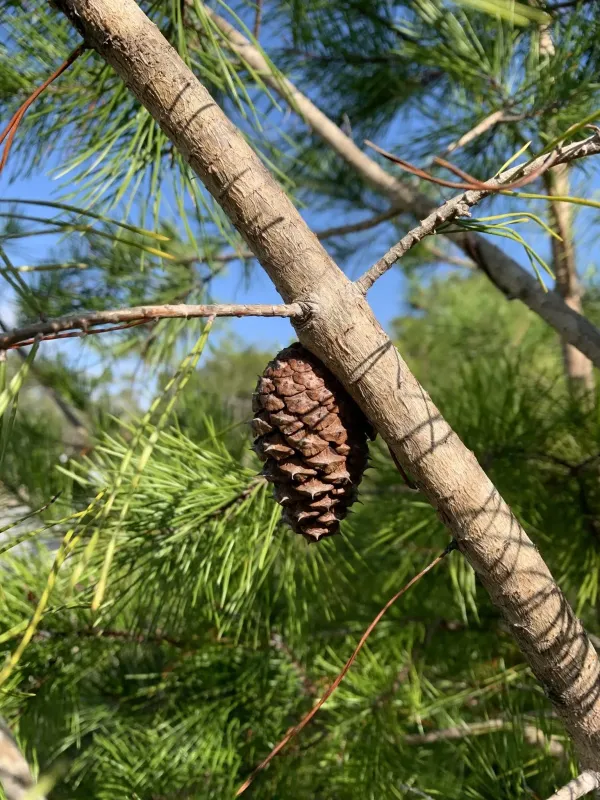
Description
Growing requirements
Sand pine (Pinus clausa) is an evergreen conifer belonging to the Pinaceae family. It is native to the southeastern United States, particularly Florida and Alabama, where it thrives in coastal plains and inland sand ridges.
The botanical structure of the Sand pine is characterized by slender branches and a relatively narrow crown. It is a smaller to medium-sized tree that is uniquely adapted to thrive in nutrient-poor, excessively drained sandy soils where other pine species might fail.
The tree requires significant sunlight to flourish. As a shade-intolerant species, it develops best in open stands or clearings, which ensures that its needles receive sufficient light exposure to maintain photosynthesis and overall tree health.
In terms of climate requirements, the species prefers warm, subtropical environments. It possesses remarkable drought tolerance, which allows it to persist in regions with low seasonal rainfall and limited groundwater availability.
Silvicultural management of this species focuses on managing natural cycles. Because the tree is adapted to fire-prone environments, its serotinous cones depend on heat to release seeds, which is a crucial aspect of its natural regeneration cycle.
Main diseases and pests
The primary pathological threats to Pinus clausa include fungal diseases such as fusiform rust (Cronartium quercuum f. sp. fusiforme), which can cause significant damage to the stems and branches of young trees, hindering their growth.
Insect pests, particularly bark beetles (such as Ips species), pose a severe risk. These insects typically infest trees weakened by drought, lightning strikes, or mechanical trauma, quickly becoming a localized outbreak if conditions remain favorable.
Integrated forest management is recommended to mitigate these threats. This includes maintaining appropriate stocking density to prevent tree stress and performing sanitary thinning to remove heavily infested or diseased individual trees.
Fire management is complex for this species. While controlled burning can be used to manage understory vegetation and reduce fuel loads, it must be carefully timed to avoid destroying young, fire-sensitive cohorts that have not yet reached maturity.
Regular monitoring of forest health is essential for early detection of pest activity. By utilizing pheromone traps and aerial surveys, foresters can effectively manage population levels and ensure the longevity of the pine stands.