
Phlegmariurus squarrosus
Phlegmariurus squarrosus (G. Forst.) Á. Löve & D. Löve
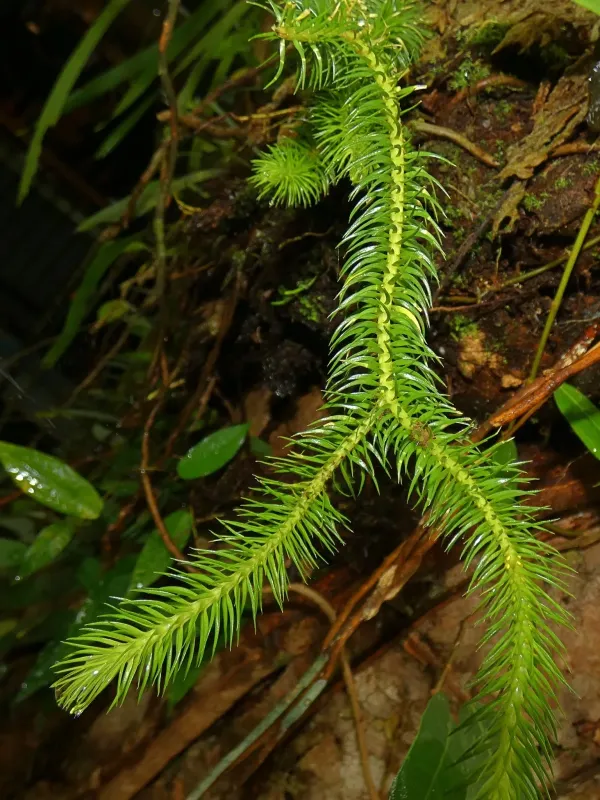
Description
Growing requirements
Phlegmariurus squarrosus is a fascinating member of the Lycopodiaceae family, widely known for its long, pendulous stems that can grow quite significantly in favorable conditions. Originating from tropical regions, this plant is primarily an epiphyte that naturally dwells on tree branches or rocky crevices.
Cultivation requires a meticulous approach to environment management, as this species does not tolerate standard domestic conditions well. A high-humidity environment, consistently maintained above 70%, is essential for the healthy elongation of its complex, dichotomously branched stems.
Temperature control is another pillar of successful agrotechnics. The plant thrives in a stable climate ranging from 20°C to 25°C. Any exposure to cold drafts or freezing temperatures can cause irreparable damage to the vascular structure of the plant.
Regarding growing media, Phlegmariurus squarrosus requires an extremely lightweight and porous substrate. A typical mix often includes long-fibered sphagnum moss, bark chips, and some charcoal to prevent the medium from becoming sour or waterlogged over time.
Light management must be precise; the plant prefers bright but strictly indirect sunlight. Direct exposure often leads to scorching and bleaching of the vibrant green foliage, while inadequate light inhibits the formation of strobili and overall growth rate.
Main diseases and pests
Fungal pathogens remain the primary threat to the health of this species. Issues such as root rot and stem blight are usually consequences of stagnant air or overwatering, which prevent the root system from obtaining necessary oxygen.
Insect pests such as scale insects and mealybugs can infiltrate the dense foliage. Due to the complex structure of the plant, manual removal of pests is often difficult, making early detection and preventative measures highly important.
To combat threats effectively, maintain strict hygiene standards within the growing area. Remove any debris or dead plant matter that could serve as a breeding ground for harmful spores or dormant insect populations.
Chemical control should be approached with caution, as many Lycopodiaceae are sensitive to synthetic pesticides. It is highly recommended to test any product on a small portion of the plant before applying it to the entire specimen.
Ensuring proper air circulation is the best defense against systemic diseases. A light fan breeze around the plant helps dissipate excess moisture and maintains a healthy microclimate for optimal growth.