
Phaeoptilum spinosum
Phaeoptilum spinosum
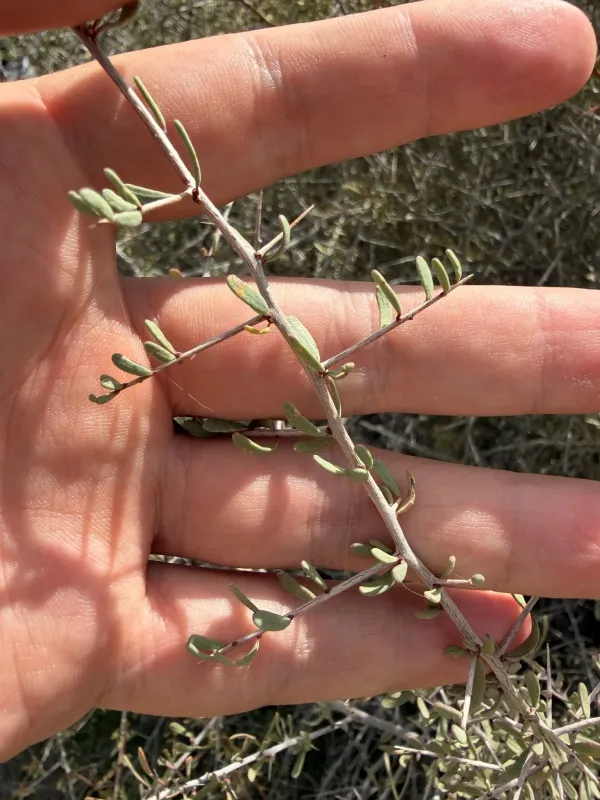
Description
Growing requirements
Phaeoptilum spinosum is a resilient shrub belonging to the Nyctaginaceae family, native to the arid environments of Namibia and South Africa. This plant has evolved specifically to thrive in regions where water scarcity is the primary limiting factor for plant growth.
The species prefers well-drained sandy or gravelly soils that are typical of desert and semi-desert habitats. It is remarkably tolerant to high temperatures and intense sunlight, which are necessary for its metabolic efficiency and development during peak growing seasons.
Cultivation practices for this species focus on site stabilization and restoration. Due to its deep root system, it acts as a critical component in preventing soil erosion, anchoring shifting sands and creating a micro-environment that allows other species to establish.
Botanically, the plant is identified by its stiff, spiny branches and small, often deciduous leaves. The flowers are surrounded by showy, persistent perianths that change color from green to shades of pink or orange, playing a significant role in its wind-assisted seed dispersal.
In terms of хозяйственного (economic) use, the plant serves as a vital forage reserve for browsers in arid rangelands. It is highly valued for its ability to produce biomass during periods when other vegetation remains dormant or fails to survive the drought.
Main diseases and pests
The primary threat to the longevity of these shrubs is overgrazing by domestic livestock in sensitive rangeland areas. Unregulated grazing pressures can severely deplete the seedling population and prevent natural regeneration of the species.
Pest pressure is generally low in its native habitat due to the plant's robust chemical defenses and thorns. However, during experimental cultivation, local herbivorous insects may occasionally cause damage to tender new growth, requiring careful monitoring to ensure healthy plant development.