
Periandra coccinea
Periandra coccinea
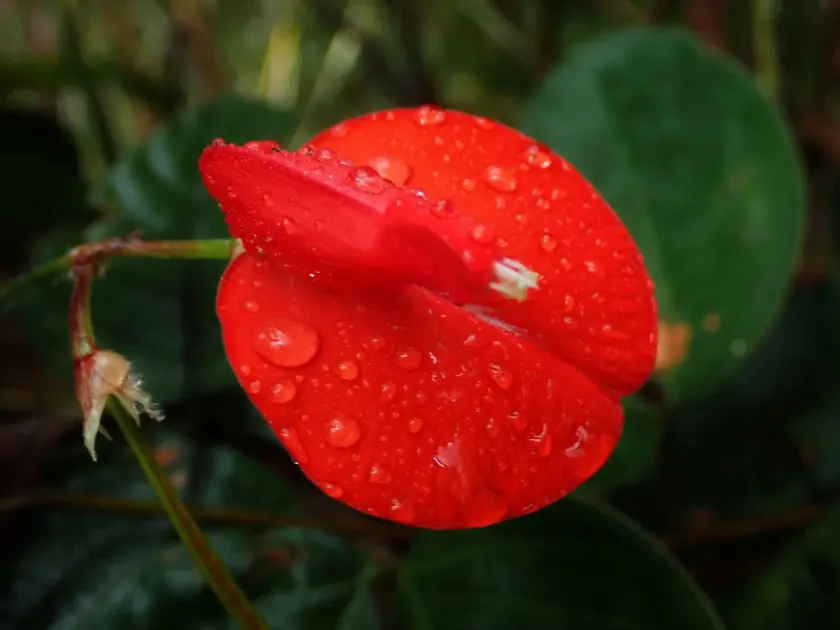
Description
Sowing dates
Periandra coccinea is a member of the Fabaceae family, and successful propagation relies on proper seed preparation. Due to a hard seed coat, scarification is a necessary step to ensure uniform germination.
Sowing should take place in a warm, humid environment, mimicking the natural rainforest climate where this species originates.
Seedlings are best started in nursery containers with a well-draining, nutrient-rich substrate, which allows for better management of moisture levels during the early stages.
The optimal depth for planting seeds is approximately 2 to 3 centimeters, which balances the need for coverage with the seedling's ability to emerge.
Once the primary leaves have fully developed, the plants should be hardened off before being transitioned to their final growing site to minimize transplant shock.
Growing requirements
This tropical plant thrives in conditions that provide filtered light and high atmospheric humidity, avoiding direct exposure to harsh midday sun.
Soil requirements focus on fertility and drainage; a loamy soil mix enriched with organic compost is ideal to support vigorous vine development.
Temperatures should consistently remain between 22 and 28 degrees Celsius to promote active growth cycles and successful flowering.
As a climbing vine, Periandra coccinea requires vertical support structures, such as trellises or poles, to prevent the foliage from matting on the ground.
Watering frequency should be adjusted based on soil moisture monitoring, ensuring the substrate is consistently moist but never waterlogged to avoid root stress.
Main diseases and pests
The most significant threats to this crop include soil-borne fungal pathogens which can lead to rapid root decay if drainage is inadequate.
Foliar diseases, often manifesting as spots or mildew, can occur when air circulation is poor and humidity remains too high for extended periods.
Common insect pests include mites and sap-sucking insects that target new growth, which can lead to stunted development and reduced flowering.
Early detection of signs of stress, such as discoloration or wilting, is essential for implementing effective management strategies.
Integrated pest management, focusing on beneficial insects and maintaining optimal growing conditions, is the preferred approach for sustainable cultivation.