
Peponium mackenii
Peponium mackenii
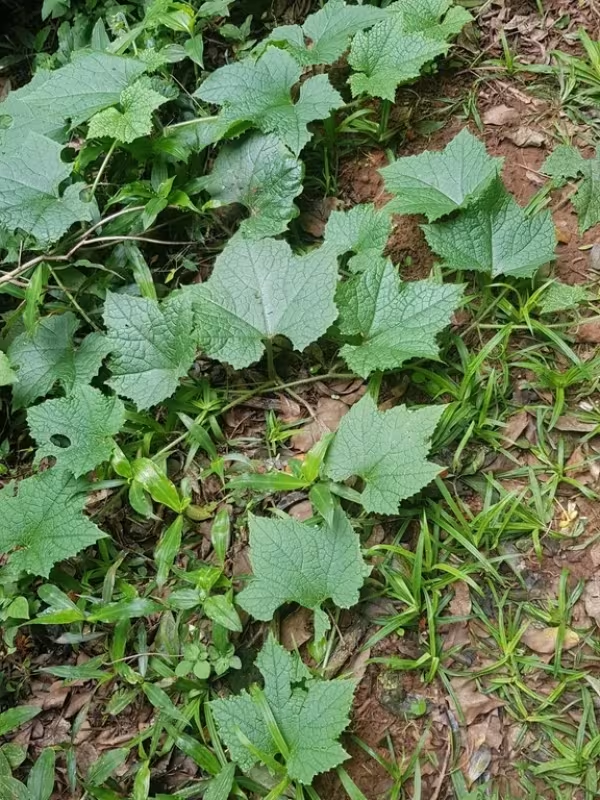
Description
Sowing dates
Sowing of Peponium mackenii seeds is typically conducted in controlled greenhouse environments to ensure consistent germination rates during the warmer months.
Seeds should be planted at a shallow depth in a well-draining, nutrient-rich potting medium to facilitate rapid root development.
Pre-treatment, such as light scarification or soaking in lukewarm water for several hours, is recommended to break dormancy and improve uniformity.
Adequate spacing must be maintained during the initial stages to prevent overcrowding and to promote strong, healthy stem development in seedlings.
Once the seedlings reach a transplantable size, they should be hardened off gradually before being moved to their final cultivation site.
Growing requirements
As a member of the Cucurbitaceae family, Peponium mackenii thrives in tropical conditions, requiring consistently warm temperatures and high relative humidity.
The plant requires a sturdy support structure to accommodate its climbing habit, as it utilizes sensitive tendrils to anchor itself to vertical surfaces.
Soil requirements include high organic content, excellent drainage, and a slightly acidic to neutral pH balance to support vigorous vine growth.
Regular irrigation is essential, although it is critical to allow the top layer of soil to dry slightly between waterings to prevent root system stress.
Proper light exposure, preferably bright filtered light rather than direct harsh sunlight, is ideal for maintaining leaf health and preventing chlorophyll degradation.
Main diseases and pests
Powdery mildew represents a primary pathological threat to Peponium mackenii, particularly when ambient humidity levels fluctuate within indoor growing areas.
Spider mites are common arthropod pests that often flourish in low-humidity environments, necessitating frequent misting or targeted biological control.
Root rot, induced by fungal pathogens in waterlogged soils, is a common issue that can lead to the rapid decline and death of the plant specimens.
Aphid infestations may occur on tender apical shoots, requiring early intervention with organic surfactants or biological predators to preserve plant vigor.
Effective management strategies involve a combination of rigorous sanitation, proper ventilation, and the avoidance of over-fertilization with excess nitrogen.