
Oriental Inula
Pentanema orientale (Lam.) D. Gut. Larr. et al.
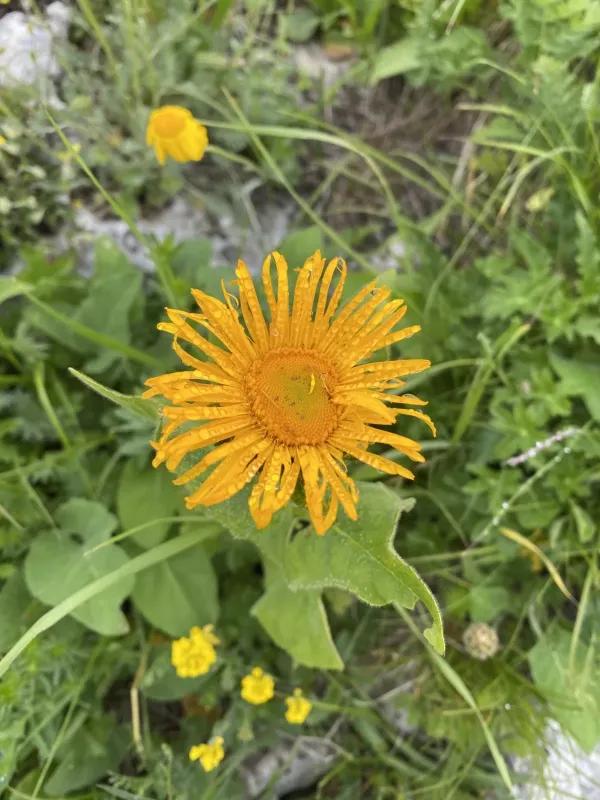
Description
Sowing dates
Cultivation of Oriental Inula (Pentanema orientale) begins with high-quality seeds that typically require stratification to break dormancy and ensure uniform germination.
The optimal sowing time is late autumn or early spring, as soon as soil temperatures reach at least 5 to 8 degrees Celsius for stable emergence.
Seeds should be planted at a shallow depth of 1 to 2 centimeters to ensure they receive sufficient light and moisture while maintaining good contact with the soil.
For commercial production, a row spacing of approximately 60 centimeters is recommended, allowing for sufficient light penetration and easier mechanical maintenance.
During the germination phase, consistent moisture is vital. Using row covers or mulching can help maintain the required humidity for delicate young seedlings.
Growing requirements
Oriental Inula belongs to the Asteraceae family and is a sun-loving species that thrives best in open, well-lit locations throughout the growing season.
The crop prefers fertile, well-drained loamy soils with a neutral or slightly acidic pH, avoiding areas prone to waterlogging or heavy soil compaction.
This perennial is remarkably winter-hardy, adapting well to various temperate climates, which makes it a resilient choice for field cultivation.
Soil preparation should involve deep tillage and the incorporation of organic matter, such as compost, to support the long-term growth of the root system.
While the plant is quite drought-tolerant once established, supplemental irrigation is necessary during the first year of growth to ensure healthy plant development.
Yield
Commercial yields of the rhizomes are typically harvested in the second or third year, as this allows the plant enough time to accumulate biomass.
Growers can expect an average yield of 1.5 to 2.5 tons of dried raw material per hectare, depending on soil quality and agricultural management.
The efficiency of nutrient uptake and rhizome storage is greatly enhanced by removing flower stalks during the first season, focusing energy on the root mass.
Managing the plant density and ensuring optimal nutrition are the two main levers for increasing the economic yield of this medicinal crop.
Crop rotation is essential; Oriental Inula should not be replanted in the same soil for at least four years to prevent the depletion of specific soil minerals.
Main diseases and pests
Powdery mildew is the most common fungal disease affecting the foliage, particularly in regions with high humidity and poor air circulation among the plants.
Root rot can become a significant problem in fields with poor drainage, which can lead to rapid decline and loss of the commercial harvest.
Pests like aphids can infest young shoots, necessitating integrated pest management strategies to protect the vigor of the plants during the early season.
Proper weed management is critical during the first growing season, as slow early-stage development makes the crop susceptible to competition from faster-growing weeds.
- Implementing wide row spacing for better ventilation.
- Using preventative biological fungicides.
- Regular mechanical cultivation to aerate the soil.
- Removing debris to minimize pathogen overwintering.
Harvesting
The harvest of Oriental Inula rhizomes is timed for the autumn months, when the vegetative growth has ceased and the nutrients have moved back into the roots.
Mechanical harvesters are used to lift the roots, which are then cleaned of any remaining soil to prepare them for the processing stage.
Prompt processing is essential; the roots should be washed thoroughly and sliced into smaller segments to ensure even and efficient drying.
Drying occurs in specialized climate-controlled facilities at temperatures not exceeding 50 degrees Celsius to preserve the active biological compounds.
Once dried, the product should be stored in moisture-proof containers in a cool, dark environment to maintain its quality until it is sent for secondary processing.