
Pentactina rupicola
Pentactina rupicola
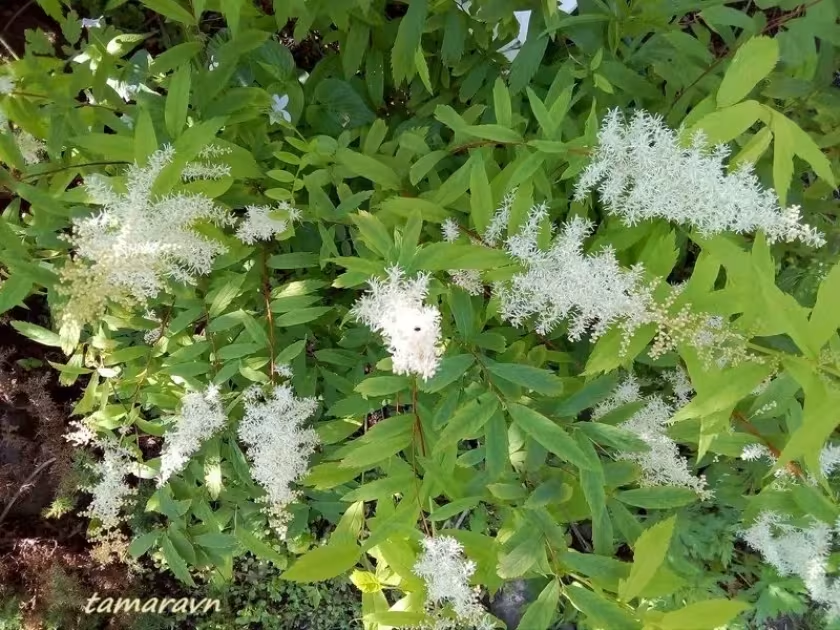
Description
Growing requirements
Pentactina rupicola is a rare deciduous shrub belonging to the Rosaceae family. It is a monotypic or very limited genus known primarily among botanical researchers for its highly specialized ecological niche.
The plant exhibits specific botanical traits including woody, branched stems and small, white, star-shaped flowers arranged in corymbs. These features allow it to persist in hostile rock crevices where many other plant species fail to establish.
In terms of habitat, the species thrives in mountainous regions of East Asia. It requires a rocky, mineral-rich substrate with exceptional drainage. The plant is well-adapted to cooler climates and high-altitude moisture levels, showing remarkable resilience to frost.
Cultivation of this species requires mimicking its natural environment: strict drainage control is essential to prevent root rot, while supplemental fertilization should be used sparingly. It is most suited for specialized rock gardens and conservation-focused botanical collections.
The economic and research value of Pentactina rupicola lies in its genetic potential for extreme climate adaptation. Ongoing studies focus on preserving the species, as it is considered rare and vulnerable to habitat disruption within its native range.