
Oregon boxleaf
Paxistima myrsinites (Pursh) Raf.
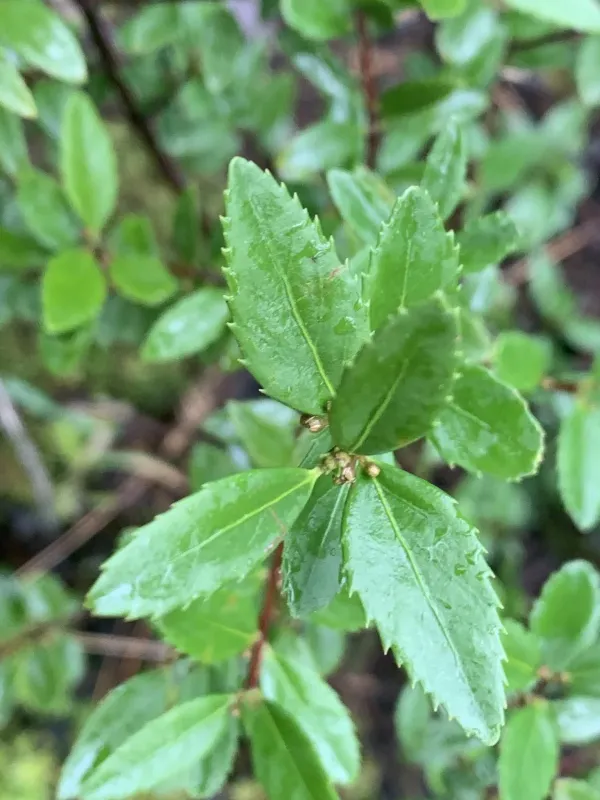
Description
Growing requirements
Oregon boxleaf (Paxistima myrsinites) is a low-growing evergreen shrub native to western North America, belonging to the Celastraceae family. It is widely recognized for its dense habit and small, serrated, deep green leaves that provide year-round interest in garden settings.
The plant is typically found in mountainous woodlands and rocky slopes, indicating its preference for cool environments and well-draining soils. In a horticultural context, it thrives best in locations where it can receive dappled light, mimicking its natural forest habitat.
Soil conditions should ideally be acidic to neutral and rich in organic matter. While it is quite hardy once established, it requires consistent moisture during its first few seasons. Avoiding heavy, waterlogged clay soils is essential to prevent root issues, which the species is susceptible to.
This shrub is highly valued for its slow growth, making it a perfect candidate for small spaces, foundation plantings, and woodland gardens. It acts as an excellent groundcover, especially in areas where taller, more demanding plants might struggle to survive the winter.
Maintenance is relatively minimal; pruning should be performed sparingly to maintain the plant's natural shape. Applying a layer of mulch around the base will help retain soil moisture and regulate ground temperatures, ensuring healthy growth throughout the summer season.
Main diseases and pests
The most common health issues for Oregon boxleaf are related to fungal infections caused by excessive moisture or poor air circulation. Root rot is a significant concern if the drainage is inadequate, often leading to sudden decline or chlorosis in the foliage.
Pests are generally not a major problem, but spider mites can occasionally affect the shrub during prolonged hot, dry spells. Monitoring the undersides of the leaves during peak summer heat can help detect early infestations before they cause significant damage.
Effective management includes maintaining a clean growing area by removing fallen leaves and debris that could harbor spores. Good air circulation is the best preventative measure against most leaf-spotting fungi that can affect this plant.
If chemical intervention becomes necessary, systemic insecticides or fungicides should be applied carefully to avoid damaging the plant's delicate tissues. Always ensure that the product is suitable for evergreen shrubs before application.
Overall, providing an environment that matches its native ecological conditions is the most effective way to prevent diseases. A plant grown in appropriate light and soil conditions will show strong natural resistance to both pathogens and insect pests.