
Parasitaxus
Parasitaxus usta
Description
Growing requirements
Parasitaxus usta is a remarkable plant species belonging to the Podocarpaceae family. It is recognized as the only known parasitic conifer in the world, having completely lost its ability to perform photosynthesis and instead relying on a host plant for nutrients.
The species is endemic to the island of New Caledonia, thriving exclusively in dense tropical forests. It maintains a strictly parasitic relationship with Falcatifolium taxoides, connecting its root system to the host tree to derive energy and minerals needed for survival.
This plant requires specific environmental conditions to survive, including high ambient humidity, consistent tropical temperatures, and the constant presence of its specific host. Due to its obligate parasitic nature, it cannot be cultivated in nurseries or greenhouses outside its native ecosystem.
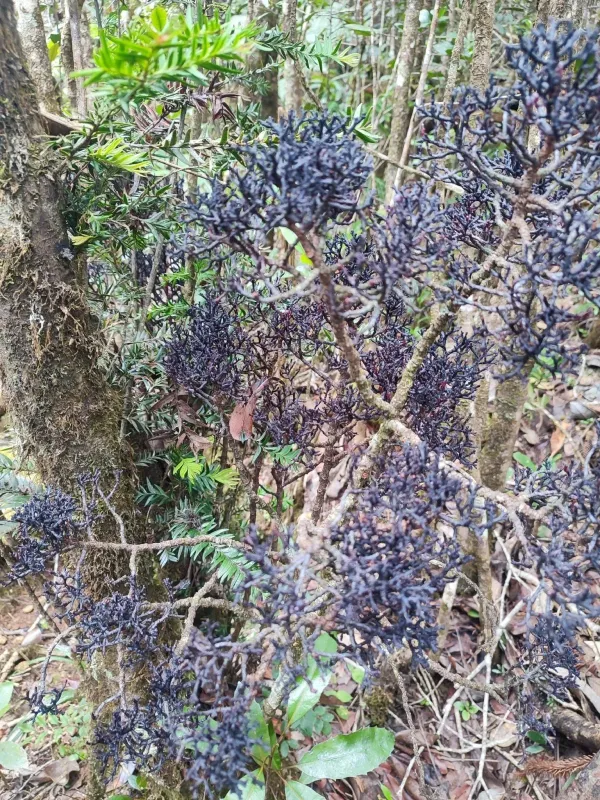
The morphology of the plant is distinctive, characterized by small, reddish-brown or dark-maroon shrubs. Its leaves are highly reduced, and its overall physical structure reflects its adaptation to a life devoid of chlorophyll, favoring a heterotrophic lifestyle in the shaded forest floor.
Because of its extreme rarity and complex biological dependence, Parasitaxus usta has no agricultural or commercial utility. It remains a subject of high interest for botanical research, serving as a unique example of evolutionary adaptation among gymnosperms.
Main diseases and pests
The primary threat to the continued existence of this species is habitat destruction and the loss of biodiversity in New Caledonian forests. As it is entirely dependent on the health of its host tree, any environmental change that negatively impacts the host population directly threatens the survival of the parasite.