
Parahyparrhenia annua
Parahyparrhenia annua
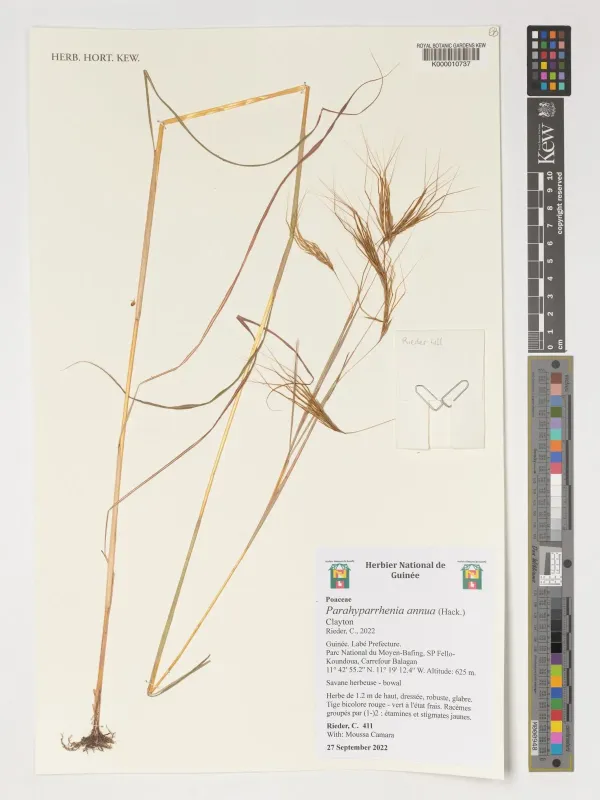
Description
Sowing dates
Parahyparrhenia annua requires warm soil conditions for effective germination. Sowing should be scheduled for late spring, once the risk of frost has completely passed and soil temperatures are consistently high.
Preparation of the seedbed is critical; the soil must be fine-tilled and free from weed competition, as this grass is sensitive to crowding during its initial growth phase. A clean, leveled field ensures uniform emergence.
Seeding depth should be kept shallow, as the small seeds rely on warmth and light for rapid development. Using precise drilling equipment helps in maintaining optimal plant density across the field.
Adequate soil moisture is necessary at the time of sowing. Farmers should monitor local rainfall patterns and provide supplementary irrigation if the upper soil layer becomes too dry, which could delay or prevent seedling establishment.
Rolling the soil after sowing can significantly improve seed-to-soil contact, which is essential for uniform water uptake and early vigor in this annual grass species.
Growing requirements
This species belongs to the Poaceae family. It is a thermophilic annual grass that thrives in high-temperature environments, making it an excellent candidate for regions with long, sunny growing seasons.
Regarding soil preferences, it grows best in well-drained loamy or sandy loam soils. It is intolerant of waterlogged areas, which can lead to root system degradation and poor nutrient absorption.
The plant has a high demand for light. Shaded conditions or high-density sowing without proper thinning can significantly reduce the potential biomass production and nutritional value of the forage.
Water requirements are moderate, but consistent moisture during the vegetative phase maximizes leaf development. While the plant has some resilience to heat, severe prolonged drought will limit its productivity.
Balanced fertilization, particularly the application of nitrogenous fertilizers, is necessary to support the fast growth rate characteristic of this grass species during its short lifecycle.
Main diseases and pests
Fungal diseases are a primary concern, especially in areas with high humidity or poor airflow. Leaf blight and powdery mildew can significantly reduce the quality of the green biomass if not managed.
Insect pests, including various species of grass-feeding aphids and stem borers, can damage the crop. These pests interfere with the plant's nutrient transport, leading to stunted or deformed growth.
Integrated pest management, including crop rotation with non-grass species, is recommended to break the life cycles of soil-borne pathogens and pests that specifically target this family.
Early-season weed control is vital, as fast-growing weeds can outcompete the young seedlings for light and water. Selective herbicides should be used according to local agricultural regulations.
Monitoring the field for signs of chlorosis or wilting is recommended, as these symptoms can indicate either nutrient deficiency or the early stages of a developing pathogenic infection.
Harvesting
The harvest phase should be timed to coincide with the period of peak nutrient density, typically during the booting or early flowering stage. Cutting later leads to a significant decrease in protein content.
Standard forage harvesting equipment, such as disc mowers or windrowers, is effective for this crop. The cutting height should be managed to prevent damage to the plant's base, especially if multi-cut potential is expected.
Drying the cut material efficiently is crucial for storage. Spreading the grass in thin layers and turning it frequently reduces the moisture content to levels safe for hay storage.
Proper storage in ventilated barns or under protective covers prevents spoilage and maintains the nutritional integrity of the forage until it is required for feeding livestock.
The final product is highly valued as high-quality forage for ruminants, providing essential energy and structural carbohydrates necessary for healthy livestock growth and productivity.