
Palimbia rediviva
Palimbia rediviva
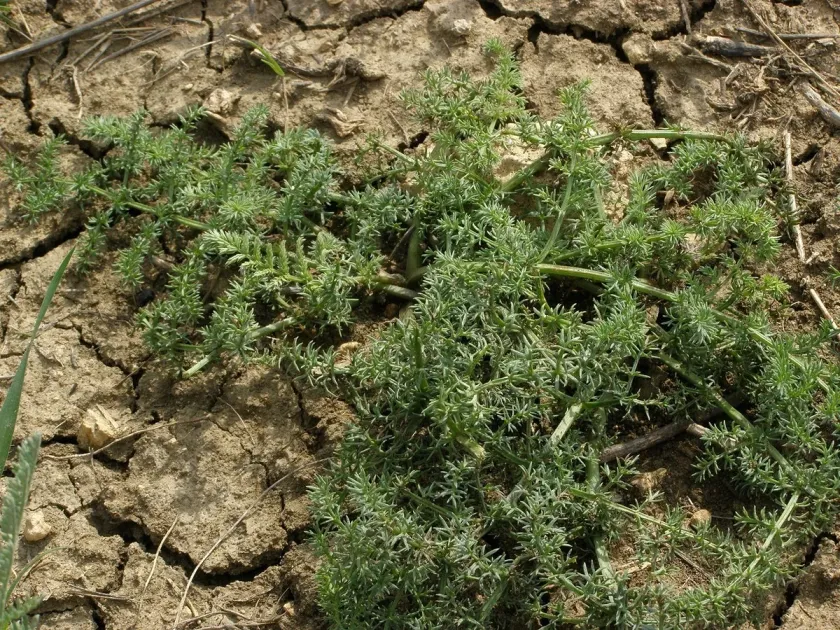
Description
Growing requirements
Palimbia rediviva is a perennial herb belonging to the Apiaceae family. It is recognized primarily as a halophyte, an organism that thrives in saline environments, making it a unique candidate for agriculture on soils where conventional crops fail to establish or produce significant yields.
The native distribution of this species spans various steppe and semi-arid regions of Eurasia. It is specifically adapted to salt-affected meadows and saline basins, where it benefits from a chemical composition that would otherwise inhibit the growth of standard domestic plant species.
Growing requirements for this crop focus on high soil salinity and good drainage. The plant prefers areas with abundant sunlight and low competition from typical glycophytes. Its robust taproot system allows it to access deeper mineral-rich water tables, which is essential for its persistence in harsh climates.
Agronomic management for Palimbia rediviva involves careful site selection and soil preparation. Since it is a specialized crop, it requires minimal freshwater irrigation, making it an excellent candidate for sustainable farming practices in water-stressed, saline-impacted geographical zones.
From a utilization perspective, the plant holds potential for the extraction of essential oils and specialized organic compounds. Further research into its cultivation could unlock value for the pharmaceutical and aromatic industries, providing a sustainable use for marginal, high-salt land parcels.
Main diseases and pests
The primary threats to this species include specialized insects that target the Apiaceae family, such as the carrot rust fly and various aphid species. These pests can significantly damage the reproductive structures, leading to lower seed yields in commercial plots.
Fungal diseases represent a major challenge, especially during periods of high humidity. Downy mildew and rust infections can spread rapidly across canopy foliage, causing premature senescence of the leaves and reducing the overall photosynthetic capacity of the plant.
Root rot pathogens, including Fusarium and Rhizoctonia, are detrimental when soil drainage is poor. Even though the plant is salt-tolerant, it remains sensitive to waterlogged conditions, which promote the proliferation of soil-borne fungi that attack the crown and root system.
Competition from weeds is particularly severe during the seedling establishment phase. As a relatively slow-growing plant, Palimbia rediviva requires effective weed management strategies to ensure that invasive grasses and forbs do not overtake the crop before it reaches maturity.
Integrated Pest Management (IPM) is crucial for this crop, emphasizing the importance of crop rotation, proper site drainage, and timely scouting for pest populations to minimize the need for heavy chemical intervention.