
Pachystigma pygmaeum
Pachystigma pygmaeum
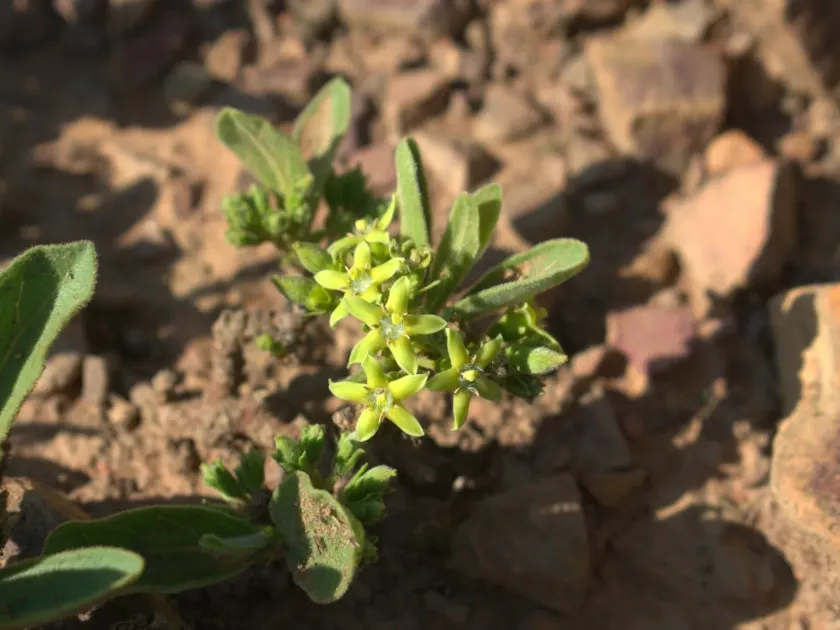
Description
Growing requirements
Pachystigma pygmaeum is a perennial plant belonging to the Rubiaceae family. It is widely recognized in agricultural circles not as a crop, but as a dangerous weed due to its toxic properties for livestock.
The plant is native to the regions of Southern Africa. It thrives in savannah environments and grazing lands, often colonizing nutrient-poor, sandy, or rocky soils where other vegetation may struggle to establish.
Botanically, it is a dwarf shrub characterized by an extensive underground root system that enables survival through severe droughts. The plant produces fruits that are particularly hazardous to cattle and sheep during the peak of summer.
It requires very little in terms of specific soil conditions or cultivation practices. It is a highly competitive plant, capable of displacing valuable forage species, which makes it a persistent nuisance in rangeland management.
In terms of agricultural utility, it holds no value for cultivation. It is categorized as an invasive toxic species that requires integrated management strategies to protect the health of livestock in the region.
Main diseases and pests
The primary concern regarding Pachystigma pygmaeum is its severe toxicity. Ingestion of its leaves or fruits leads to a condition known as 'gousiekte' (quick sickness), which is fatal to ruminants.
This condition is caused by specific toxins within the plant that induce heart failure. Animals often die suddenly, making it a critical concern for farmers who rely on extensive grazing systems in Southern Africa.
There are no significant diseases or pests known to limit the growth of this plant in nature. Its natural resistance makes it an exceptionally hardy weed, difficult to eradicate through simple mechanical means.
Management efforts primarily involve manual grubbing and the targeted application of herbicides. Constant monitoring of grazing fields is necessary to identify and remove new growth before it matures and spreads further.
Proactive grazing management, including the rotation of paddocks and providing supplementary fodder during dry seasons, is essential to ensure that livestock do not resort to consuming this toxic plant when forage is scarce.