
Pachystachys
Pachystachys Nees
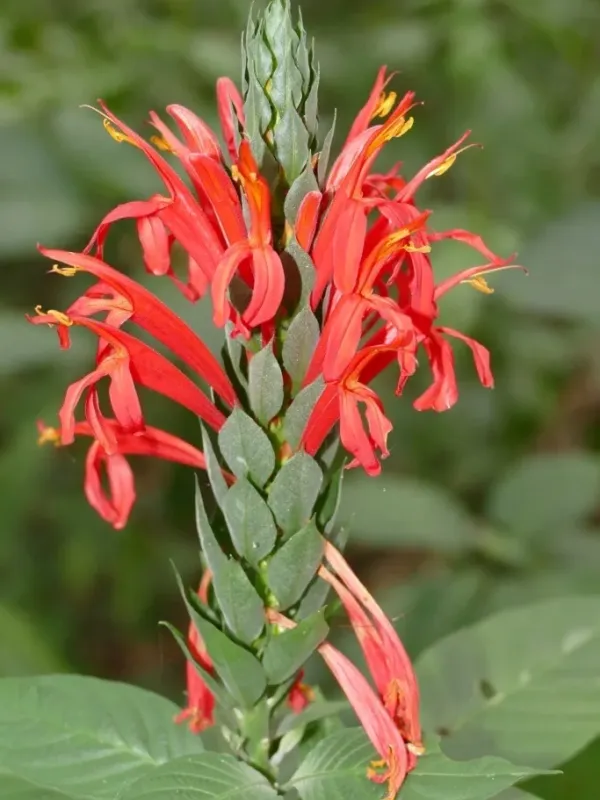
Description
Growing requirements
Pachystachys is a genus of flowering plants belonging to the Acanthaceae family, native to the tropical regions of Central and South America. These evergreen shrubs are widely recognized for their distinctive, upright, cone-shaped inflorescences.
The plant requires bright, indirect light for optimal development. Exposure to direct sunlight, especially during the peak hours of the day, can cause significant leaf scorch, while insufficient light leads to leggy stems and poor flower production.
Temperature management is critical for this crop. It thrives in warm environments, ideally between 20°C and 25°C. Exposure to cold drafts or temperatures dropping below 15°C can cause severe stress and leaf abscission, often compromising the plant's health.
Soil moisture should be maintained consistently. Pachystachys requires a well-draining, nutrient-rich substrate, typically composed of peat, leaf mold, and sand. Avoiding waterlogged soil is essential, as the root system is prone to hypoxia and fungal rot.
Humidity requirements are relatively high due to its tropical origin. Frequent misting or the use of humidity trays is recommended to maintain the air moisture levels necessary to prevent the edges of the leaves from drying out and turning brown.
Main diseases and pests
Spider mites represent a major threat to Pachystachys, particularly in low-humidity environments. These pests feed on the cell sap of the leaves, causing them to yellow and eventually die off if the infestation is not controlled.
Mealybugs are another common pest that tends to cluster in the axils of leaves and on the undersides of stems. They excrete honeydew, which can further encourage the growth of sooty mold, damaging the aesthetic and physiological state of the plant.
Root rot is the most prevalent pathological issue resulting from improper irrigation practices. Overwatering creates anaerobic conditions in the root zone, facilitating the growth of pathogens that destroy the plant's ability to absorb nutrients.
Scale insects can also attach themselves to the stems and leaves, extracting nutrients and weakening the plant. Mechanical removal combined with systemic insecticides is the standard treatment approach for heavy infestations.
To ensure long-term productivity and health, it is vital to practice balanced fertilization, avoiding excessive nitrogen which can lead to rapid, weak growth that is more attractive to pests and more susceptible to environmental stress.