
Mountain sorrel
Oxyria digyna
Description
Growing requirements
Mountain sorrel (Oxyria digyna) is a perennial herbaceous plant belonging to the Polygonaceae family. It is widely recognized as a circumpolar species, thriving in alpine and arctic tundra ecosystems where it colonizes rocky slopes and moist, gravelly ground.
The crop requires well-drained, acidic to neutral soils that can retain moisture throughout the growing season. Because it originates from alpine environments, it demands a cool climate and is poorly suited to warmer lowland gardens where temperatures frequently exceed 20 degrees Celsius.
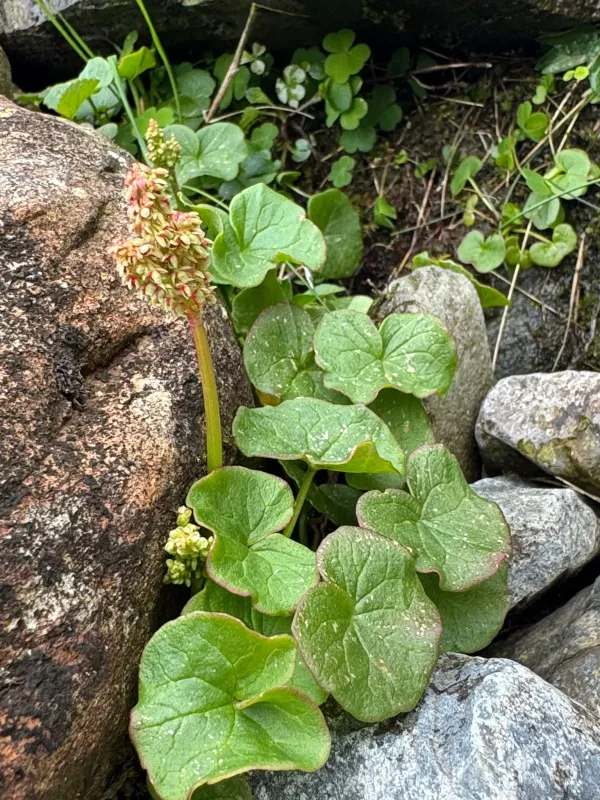
Botanically, the plant is characterized by a thick, fleshy taproot and a cluster of kidney-shaped, succulent leaves. It remains low to the ground to minimize wind damage, producing racemes of small, reddish-green flowers that are wind-pollinated.
Cultivation practices focus on mimicking its natural habitat. It performs best in partial shade or areas with constant air movement, which prevents the build-up of excess heat and fungal spores around the foliage.
As a food source, it is highly valued for its tart taste, which is provided by its high content of oxalic acid and Vitamin C. This makes it a popular wild vegetable in high-latitude regions, often gathered as a substitute for common garden sorrel.
Harvesting
Harvesting usually occurs during the brief summer period when leaves are at their most succulent and before the plant begins to bolt. Regular harvesting of the outer leaves encourages the plant to maintain its vegetative state for longer.
For sustainable yields, only a portion of the leaf mass should be collected from each individual plant. This ensures that the root system retains enough energy to survive the coming winter and initiate rapid growth in the following spring.
The leaves are typically hand-picked in the early morning to maintain crispness and prevent wilting. They should be handled with care, as the thin leaf blades bruise easily, which quickly degrades their nutritional quality and flavor.
Post-harvest storage should be done in cool, humid conditions, ideally at temperatures just above freezing. The shelf life is relatively short, so processing or fresh consumption is recommended within a few days of harvesting.
Proper harvest technique also involves removing any damaged or yellowing leaves to promote better air circulation and hygiene, which helps to keep the remaining plant population healthy and productive.