
Osoberry
Osmaronia cerasiformis
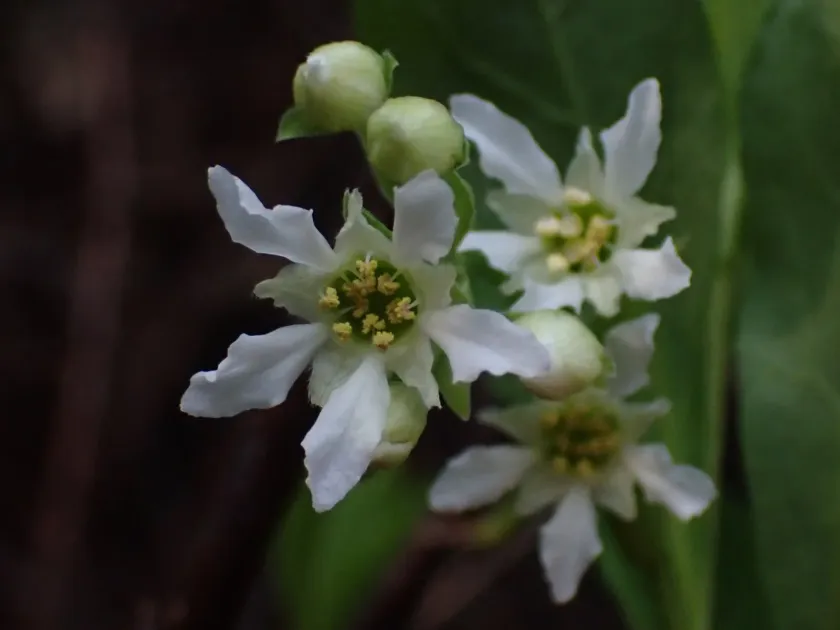
Description
Growing requirements
Osoberry, or Osmaronia cerasiformis, is a deciduous shrub belonging to the Rosaceae family. It is native to the western regions of North America, where it typically thrives in wooded areas, riparian zones, and forest margins.
This species requires consistently moist but well-draining soil to perform optimally. It prefers fertile, loamy soils with a pH ranging from slightly acidic to neutral, rich in organic humus.
The shrub is adaptable to various light conditions, thriving in both full sun and partial shade. In warmer climates, protection from the intense afternoon sun is recommended to prevent leaf scorch and drought stress.
Agronomic management involves regular irrigation during the establishment phase and throughout dry summer spells. Applying a balanced organic fertilizer in early spring supports healthy growth and encourages the development of early spring blooms.
As a landscape plant, it is highly valued for its early flowering cycle and its ability to attract pollinators, such as bees and hummingbirds, early in the growing season.
Main diseases and pests
Osoberry is generally resilient, but it can be susceptible to fungal issues like powdery mildew if air circulation is poor or if the foliage remains excessively wet for long durations. Proper spacing during planting is key to preventing these conditions.
Common pests include aphids and spider mites, which may target new, succulent growth. Monitoring the underside of leaves for signs of infestation is a vital component of routine garden maintenance.
Sanitation practices, such as removing dead or diseased branches, help maintain the overall vigor of the plant. Pruning should be done carefully to keep the structure open, facilitating better light penetration and airflow.
Winter protection is necessary in colder zones, where deep mulching around the root zone helps regulate soil temperature. This practice also aids in moisture retention throughout the year.
When chemical intervention is required, integrated pest management strategies should be prioritized, focusing on least-toxic options to preserve the beneficial insects that visit the plant during its early flowering period.