
Orthodontium lineare
Orthodontium lineare
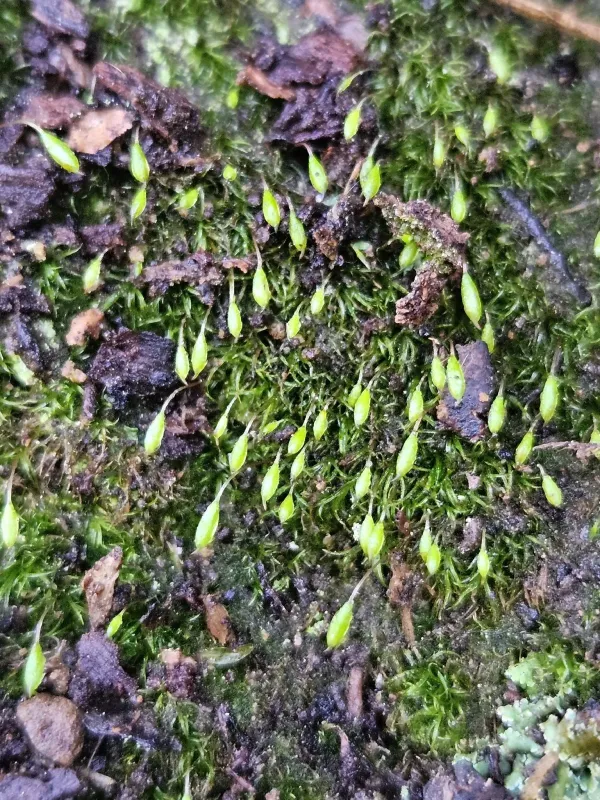
Description
Growing requirements
Orthodontium lineare is a species of moss belonging to the family Bryaceae. While not an agricultural crop, it is a significant species in botanical studies due to its invasive nature and rapid spread across various regions in the Northern Hemisphere.
The plant is characterized by small, dense tufts of yellow-green moss. Its stems are thin and densely packed with linear-shaped leaves, which give the plant its characteristic appearance and taxonomic identification.
It thrives in humid, shaded environments and is particularly fond of acidic substrates. It is commonly found growing on decaying wood, coniferous bark, and sandy soils, showing a preference for environments with a low pH level.
Climatic requirements involve stable atmospheric moisture levels. The moss is well-adapted to oceanic and temperate climates, where it can colonize new areas if the moisture and substrate availability are sufficient throughout the year.
As this is not a cultivated plant, there are no standard agricultural techniques for its production. Scientific research focuses on its ecological impact, particularly how it interacts with native bryophyte communities in forest ecosystems.
Main diseases and pests
The primary threat to Orthodontium lineare is the loss of suitable microhabitats, particularly the removal of decaying wood in managed forests. Without its primary substrate, the colonies are unable to establish themselves successfully.
Prolonged drought periods represent a major risk to the plant's health. Due to its physiological reliance on external moisture, extended dry spells cause the moss to dehydrate quickly and potentially die back.
Air pollution, specifically high levels of sulfur dioxide and nitrogen deposition, can negatively impact the species. As a bioindicator of air quality, the presence or absence of this moss is often monitored by environmental scientists.
Competition from more aggressive, native plant species in nutrient-rich conditions often leads to the displacement of Orthodontium lineare. When forest floor conditions change, it is often outcompeted for space and resources.
Fungal infections, although infrequent in healthy populations, can occur in stagnant, waterlogged conditions. These pathogens can decay the rhizoids and stems, compromising the structural integrity of the moss mat.