
Orphium frutescens
Orphium frutescens
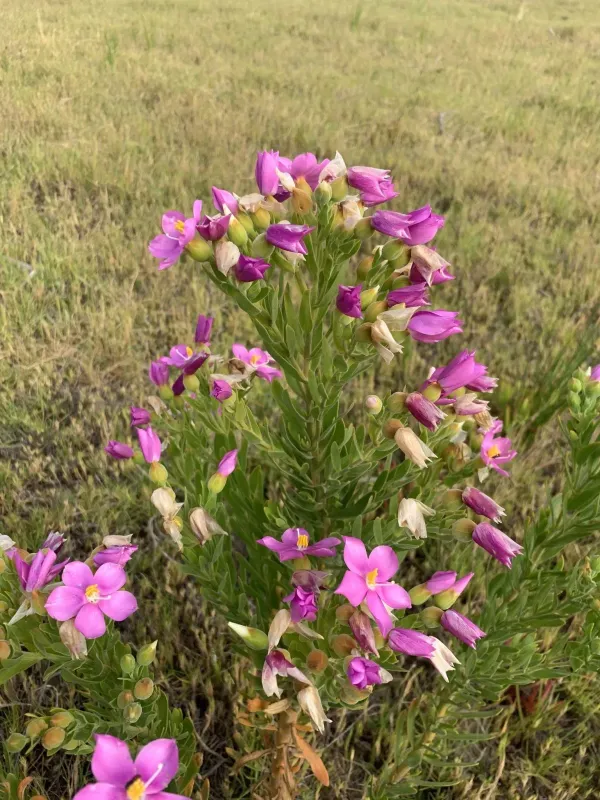
Description
Sowing dates
Orphium frutescens is typically propagated through seeds, which require specific conditions to germinate successfully due to their small size and sensitivity to environment.
Sowing should be carried out in late winter or early spring using a sterile, well-draining seed-starting mix composed primarily of peat and coarse horticultural sand.
The seeds should be sown thinly on the surface of the soil and pressed down gently, as they often require light to germinate efficiently without being buried deep.
Maintaining a constant temperature of around 20 degrees Celsius and high humidity is crucial, usually achieved by placing the seed trays in a warm, sheltered location.
Once the seedlings develop their first true leaves, they should be carefully transplanted into small pots, ensuring that their fragile root systems are not damaged during the transfer.
Growing requirements
As a member of the Gentianaceae family, Orphium frutescens is native to the coastal sand dunes of South Africa, where it thrives in harsh, high-light conditions.
The plant requires full sun exposure to maintain its compact growth habit and to trigger the production of its characteristic vibrant, cup-shaped flowers.
The soil must be sandy and extremely well-draining; any tendency for the medium to retain water for too long will lead to rapid root deterioration and plant death.
It prefers low-nutrient, acidic to neutral soil, meaning that fertilization should be done very sparingly, preferably with diluted liquid feeds during the active growing season.
The plant is not frost-hardy and must be protected from freezing temperatures, making it suitable for greenhouse or indoor cultivation in colder climate zones.
Main diseases and pests
The most significant threat to the health of Orphium frutescens is soil-borne fungal pathogens, particularly those that thrive in waterlogged, poorly ventilated substrates.
Root rot is the primary physiological disorder caused by overwatering, which quickly compromises the plant's ability to absorb water and essential mineral nutrients.
Pests such as aphids and spider mites can infest the foliage, particularly when the plants are grown in overcrowded or overly dry indoor conditions.
Mechanical damage to the leaves or stems can create entry points for secondary bacterial infections, which can result in localized tissue necrosis and plant decline.
Integrated pest management, including regular inspection and the use of insecticidal soaps or neem oil, is recommended for maintaining a clean and healthy collection.