
Rosemary broomrape
Orobanche rosmarina
Description
Growing requirements
Rosemary broomrape (Orobanche rosmarina) is an obligate root parasite belonging to the Orobanchaceae family. Lacking chlorophyll entirely, this plant cannot perform photosynthesis and relies solely on extracting nutrients, water, and minerals directly from the roots of its host plant, rosemary (Rosmarinus officinalis).
The native range of this species is primarily the Mediterranean basin, where the climate supports the growth of rosemary. It thrives in arid, sunny environments with well-drained, porous soils, mirroring the ecological preferences of the wild rosemary populations it infects in the Mediterranean ecosystem.
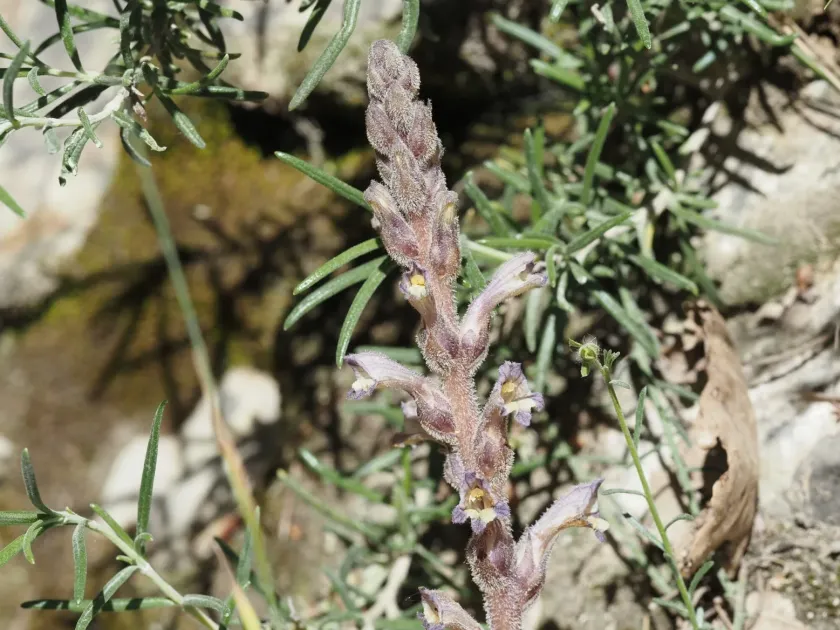
Botanically, the parasite appears as an erect stem with scale-like leaves. The showy, tube-like flowers emerge above the soil only when the parasite has established a strong connection to the host. Below ground, it forms specialized structures called haustoria that penetrate the host root to draw sap.
Germination of Orobanche seeds is highly specific, requiring chemical exudates released by the rosemary roots. In the absence of a host, the seeds can remain viable in the soil seed bank for years, making the control of this parasite extremely difficult once a field has been infested.
Agronomic management relies heavily on prevention, including the use of certified parasite-free nursery plants and deep cultivation techniques. Farmers are advised to avoid moving equipment from infested plots to clean areas to prevent the dispersal of microscopic seeds via soil attached to machinery.
Main diseases and pests
The primary threat posed by rosemary broomrape is the depletion of the host plant's vigor. By diverting energy and nutrients, the parasite reduces the vegetative growth of rosemary, which leads to a significant decrease in the yield and the concentration of essential oils in the leaves.
A major challenge is the sheer volume of seeds produced; a single broomrape plant can release thousands of tiny, dust-like seeds that are easily dispersed by wind, irrigation water, and harvesting machinery, leading to rapid contamination across entire agricultural sites.
There are very few natural pests or predators of rosemary broomrape. Because the parasite absorbs secondary metabolites and essential oils from the rosemary plant, it becomes toxic or unpalatable to most local insect herbivores, rendering classical biological control mostly ineffective.
The sites where the parasite's haustoria penetrate the host's roots create structural weaknesses, often leading to secondary infections. Fungal pathogens, such as Fusarium or Rhizoctonia, often colonize these wounds, further damaging the rosemary root system and causing decline.
Current control strategies are limited. While manual weeding is effective for small infestations, large-scale outbreaks require a combination of rigorous crop rotation and the potential use of selective herbicides. However, strict adherence to sanitation protocols remains the cornerstone of modern management.