
Thistle broomrape
Orobanche reticulata
Description
Growing requirements
Orobanche reticulata, commonly known as Thistle broomrape, is an obligate root parasite belonging to the Orobanchaceae family. As a holoparasitic plant, it lacks chlorophyll and relies entirely on host plants for water, minerals, and carbon compounds.
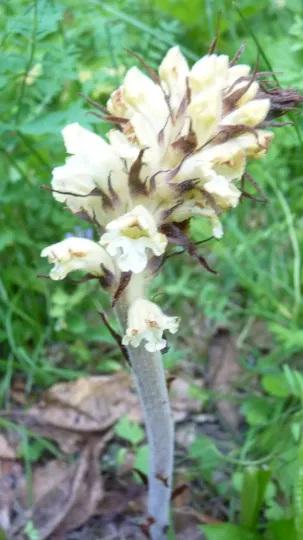
The botanical structure of this species consists of a fleshy stem with scale-like leaves and a characteristic spike-like inflorescence. Its flowers are typically yellowish-brown to purple, often displaying a distinct netted pattern on the petals, which helps in identifying the species.
The host range of O. reticulata primarily includes species of the Asteraceae family, particularly thistles and knapweeds. Its distribution is widely observed across various European habitats, favoring temperate climates where its hosts thrive in meadows and disturbed grasslands.
Ecologically, the lifecycle of the broomrape is synchronized with the development of its host. The seeds are produced in massive quantities and can remain dormant in the soil for several years until they perceive chemical signals released by the roots of a suitable host plant.
Agronomic requirements emphasize the prevention of seed bank buildup in agricultural fields. Successful management is highly dependent on long-term crop rotation schemes that break the lifecycle of the parasite by avoiding host crops for several consecutive seasons.
Main diseases and pests
The primary threat posed by Thistle broomrape is the significant reduction of crop vigor and yield in infested fields. The parasite intercepts nutrients and water directly from the vascular system of the crop, causing severe stunting and premature senescence.
Natural enemies, such as the broomrape fly (Phytomyza orobanchia), provide a form of biological regulation. These flies lay their eggs within the developing seed capsules of the broomrape, with the hatching larvae consuming the seeds and destroying the reproductive structure.
Fungal infections can also impact broomrape populations, especially in humid conditions where pathogens may cause the collapse and decay of the succulent stems. These natural mortality factors can reduce the overall pressure of the parasite on the host population.
Manual removal of broomrape stems before seed maturation is recommended for small-scale infestations. Once the seeds have matured, even minor disturbances can cause widespread dispersal of the tiny, dust-like seeds across the farm.
Chemical control remains difficult due to the close physiological relationship between the parasite and the host. Current management strategies are focused on seed bank depletion and the selection of resistant or tolerant crop cultivars, alongside strict sanitation protocols.