
Yarrow broomrape
Orobanche purpurea
Description
Growing requirements
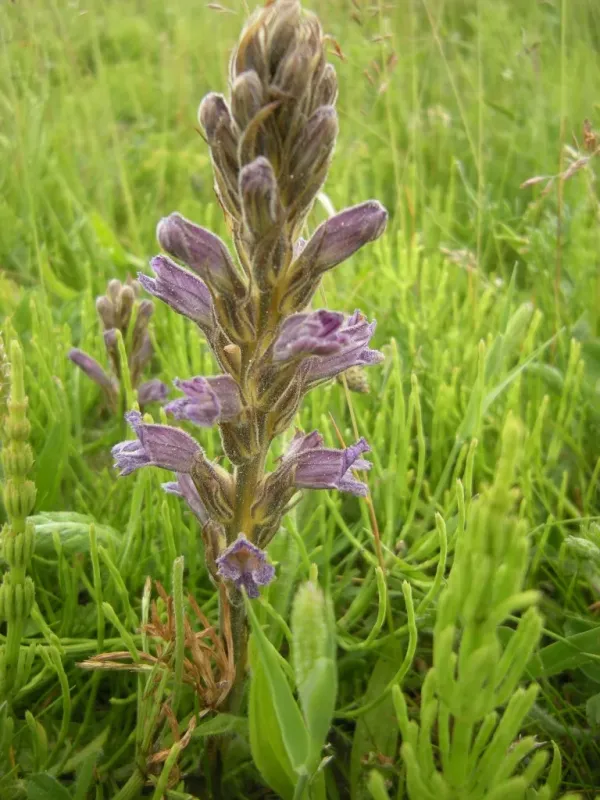
Yarrow broomrape (Orobanche purpurea) is a root parasitic plant belonging to the Orobanchaceae family. It is a holoparasite, meaning it lacks chlorophyll entirely and relies exclusively on its host for nutrients and water, which it extracts via specialized root structures called haustoria.
The plant is native to the steppe and forest-steppe regions of Europe and Asia. It predominantly infests members of the Asteraceae family, including yarrow (Achillea millefolium) and cultivated sunflower, thriving in sun-exposed and dry environments.
A critical biological feature of Orobanche purpurea is the longevity of its seeds. These microscopic seeds can remain dormant in the soil for over a decade, waiting for the specific chemical cues produced by the roots of a compatible host plant to germinate.
Successful colonization of a field depends on the interaction between host root exudates and the parasite's seed bank. Once attached, the broomrape develops an underground tuber before producing its characteristic purple-flowered inflorescence above the soil surface.
Effective management in agriculture requires a combination of strategies, including extended crop rotations, the use of broomrape-resistant crop cultivars, and the application of specialized herbicides designed to control parasitic weeds without damaging the host crop.
Main diseases and pests
The primary threat posed by yarrow broomrape is yield reduction. By intercepting essential nutrients and water, the parasite severely weakens the host plant, resulting in stunted growth, chlorosis, and in cases of heavy infestation, total crop failure.
Infested plants become highly susceptible to environmental stress and secondary infections. The disruption of the root system often leads to structural damage, making the crop easier to uproot or susceptible to root-rotting pathogens.
Phytomyza orobanchia is a significant biological control agent. The larvae of this fly feed on the internal tissues of the broomrape flower stalks and seed capsules, significantly reducing the viability and total amount of seed production for the following season.
Preventative measures are essential to stop the spread of this weed. Cleaning harvesting machinery before moving between fields is crucial, as the dust-like seeds are easily carried by wind, water, and soil clinging to agricultural equipment.
Monitoring the fields during the flowering stage is recommended to identify potential hotspots. Early manual removal of emerging broomrape stems before they produce seeds can significantly limit the seed bank buildup in the soil over time.