
Tobacco broomrape
Orobanche nicotianae
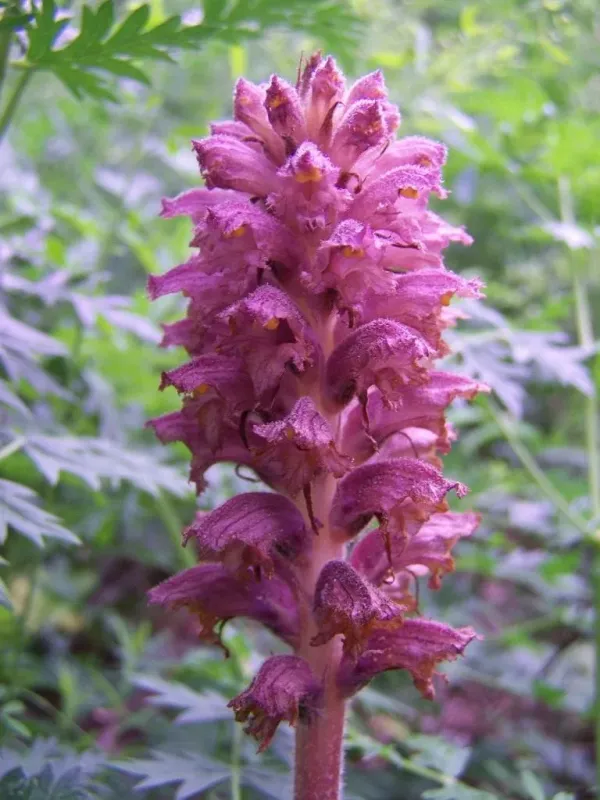
Description
Sowing dates
Tobacco broomrape is not a cultivated crop but an obligate holoparasitic plant that lacks chlorophyll and relies entirely on a host to survive. Its cycle begins when seeds in the soil detect root exudates from a host plant, primarily tobacco.
Upon germination, the parasitic seedling develops a haustorium, a specialized organ that penetrates the host's roots to tap into the vascular system. This connection allows the broomrape to siphon off essential water, nutrients, and sugars.
The parasite remains underground for the initial stages of its development, forming a tuber-like structure. As it matures, it rapidly pushes its flowering stalk above the soil surface to complete its life cycle.
Seed production is prolific, with a single plant capable of producing hundreds of thousands of microscopic seeds. These seeds are easily dispersed by wind, water, and agricultural equipment.
Because the seeds can remain dormant and viable in the soil for over a decade, long-term management is necessary to prevent widespread infestation on tobacco-growing lands.
Growing requirements
This parasitic organism thrives in warm, dry climates. It is most active in regions where high summer temperatures coincide with the growth cycle of its host crops, typically within the Solanaceae family.
Soil conditions play a critical role, with loose, well-drained, and light soils facilitating the movement of root exudates that stimulate germination. Higher temperatures in the topsoil layer generally accelerate the growth of broomrape.
Adequate soil moisture is essential during the germination phase to ensure the radicle of the parasite reaches the host root. Once the parasitic connection is established, the plant becomes remarkably resilient to environmental stress.
Agricultural management requires a multifaceted approach. Rotating away from susceptible crops for extended periods is the most effective cultural method to reduce seed banks in the soil.
Using trap crops, which trigger germination without allowing the parasite to attach, can also be a valuable tool in integrated pest management programs for tobacco fields.
Main diseases and pests
Tobacco broomrape causes significant economic losses by directly competing with the crop for resources, leading to stunted growth, wilting, and, in severe cases, the total death of the tobacco plant.
The infestation impacts the chemical composition of the leaves, directly reducing the quality and market value of the harvested tobacco. It alters the balance of alkaloids and oils, which are crucial for the product.
Control strategies for the parasite include:
- Deep plowing to bury seeds deeper than their germination depth.
- Meticulous sanitation of farm machinery to prevent moving seeds between fields.
- Chemical treatments using specialized herbicides that inhibit parasitic development without harming the tobacco.
Biological control research focuses on insects, such as specific flies, that target the floral parts of the broomrape, effectively stopping the cycle of seed dispersal.
Given the high risk of infestation, early detection and immediate removal of any broomrape stalks before they flower and seed are vital for protecting the long-term productivity of the land.