
Louisiana broomrape
Orobanche ludoviciana
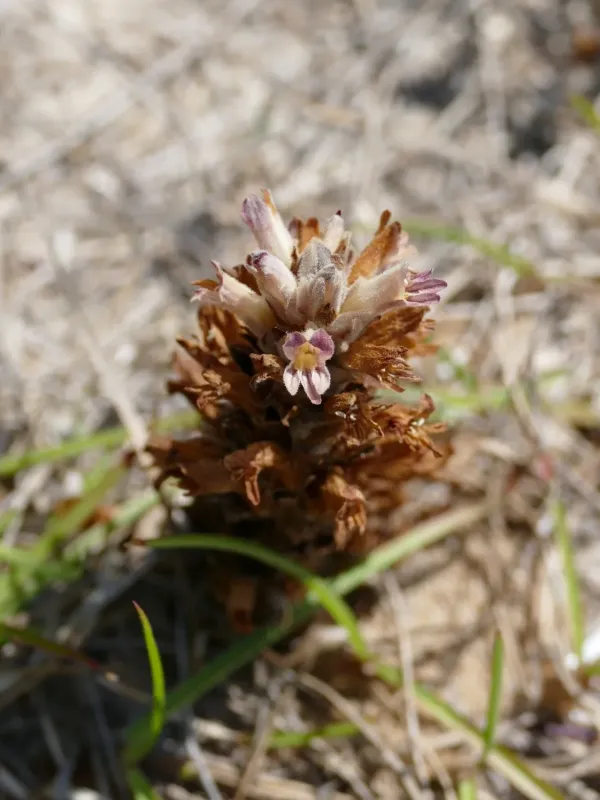
Description
Growing requirements
Louisiana broomrape (Orobanche ludoviciana) is a member of the Orobanchaceae family. It is an obligate holoparasite, meaning it lacks chlorophyll and relies entirely on host plants for water, minerals, and carbon compounds.
Native to North America, this species primarily parasitizes members of the Asteraceae family. Its natural habitat includes grasslands and arid regions, but it has expanded its range into cultivated agricultural fields where it poses a significant threat.
The plant exhibits complex life cycle requirements. Its microscopic seeds can remain dormant in the soil for years, germinating only when specific chemical compounds (strigolactones) are released by the roots of potential host plants.
Ideal conditions for the development of the parasite include warm soil temperatures and well-aerated soil structures. Once a host root is detected, the parasite develops haustoria, which penetrate the host's vascular tissue to establish an internal connection.
Agricultural management requires integrated approaches, including crop rotation, the use of trap crops to induce germination, and the cultivation of genetically resistant crop varieties to prevent parasitic attachment.
Main diseases and pests
The primary threat from Louisiana broomrape is the depletion of host resources. By extracting water and nutrients, the parasite stunts the growth of the crop, leading to significant reductions in biomass and yield potential.
In heavily infested fields, the economic impact is severe. The presence of broomrape often results in smaller crop seeds, lower oil content in oilseed crops, and potentially total crop failure in extreme infestation scenarios.
Control is challenging because the parasite is physically and physiologically linked to the host. Standard systemic herbicides are often ineffective or may damage the host crop itself, limiting chemical options.
Natural biological control agents, such as the broomrape fly (Phytomyza orobanchia), play a role in suppressing populations by feeding on the flowering stalks of the parasite, thereby reducing the annual seed bank.
Farmers are advised to prioritize prevention by ensuring machinery is cleaned to prevent seed dispersal and by monitoring fields during the flowering stage to manually remove any emerging parasitic stalks before they produce seeds.