
Wormwood broomrape
Orobanche artemisiae-campestris
Description
Growing requirements
Wormwood broomrape (Orobanche artemisiae-campestris) is an obligate parasitic plant from the Orobanchaceae family. Unlike conventional crops, it lacks chlorophyll and relies entirely on host plants, specifically various species of Artemisia, for water and nutrient supply.
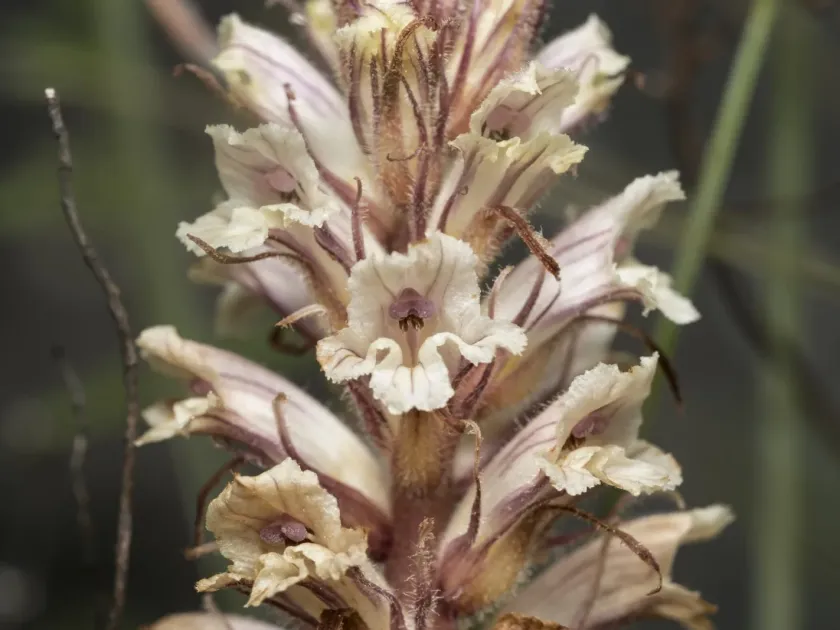
Botanically, the plant is characterized by a fleshy stem and scale-like leaves. Its reproductive success depends on the production of microscopic seeds that can remain dormant in the soil for many years, waiting for the chemical signaling molecules released by potential host roots.
The habitat of this species is typically found in arid, steppe regions with well-drained sandy soils. It thrives in environments where host plants are abundant and the soil temperature allows for the activation of its germination mechanisms during the warm season.
Agricultural management of this parasite involves rigorous sanitation. Because it is a root parasite, traditional chemical herbicides used on crops are often ineffective. Mechanical removal before the seed capsule formation is essential to prevent the spread of the seed bank.
Crop rotation remains the most effective strategy. By alternating with non-host species, farmers can break the life cycle of the broomrape, forcing the seeds to germinate without finding a suitable host and subsequently dying, thus clearing the soil over time.
Main diseases and pests
Biological threats to the wormwood broomrape include various insects, most notably the Phytomyza species. These insects act as natural regulators, with larvae feeding on the developing seeds within the capsules, preventing them from maturing and dispersing.
Additionally, fungal pathogens play a significant role in reducing broomrape populations. Damp conditions during the peak of the broomrape's flowering stage often promote fungal growth, which can rapidly rot the stem and flower stalks, effectively killing the plant.