
Onopordum nervosum
Onopordum nervosum
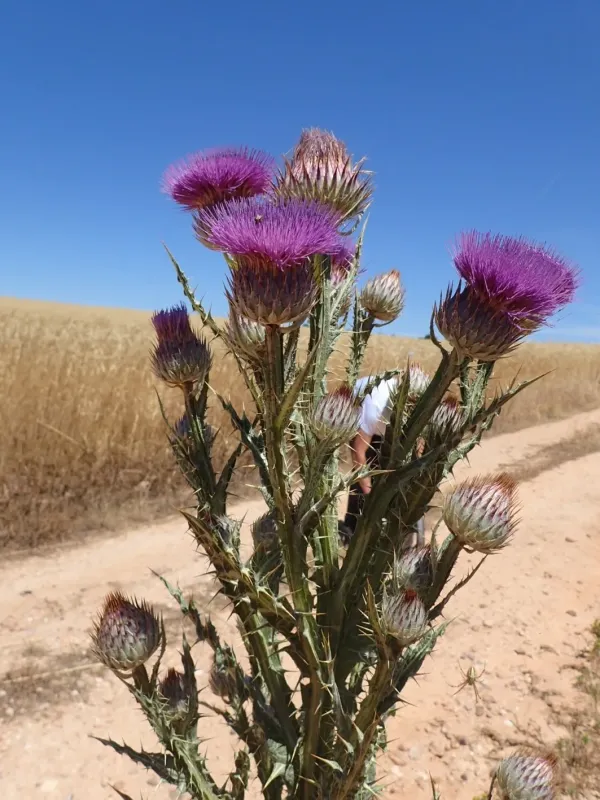
Description
Sowing dates
Onopordum nervosum is a biennial plant, and the most effective time for sowing is during the spring when soil temperatures reach consistently above 10 degrees Celsius.
Sowing in late April allows the rosette of leaves to develop fully before the intense summer heat sets in, ensuring the plant's survival through the first year.
Fall sowing is also an option in regions with mild winters, as the seeds undergo natural cold stratification, which leads to more vigorous early growth.
When planting, it is recommended to space seeds at a distance that accounts for the broad leaf rosette, typically 50-60 centimeters between rows.
Adequate soil moisture is crucial during the germination phase to ensure a high percentage of emergence, especially in lighter or sandy soil types.
Growing requirements
This species is a quintessential sun-lover, requiring full exposure to sunlight to develop its characteristic stiff stems and structural integrity.
The plant thrives in well-drained, fertile soils ranging from loamy to sandy textures, and it is notably tolerant of moderate alkalinity and low nutrient levels.
It possesses a deep taproot system, which provides the plant with exceptional drought resistance, making it suitable for growing in arid or semi-arid conditions.
As a member of the Asteraceae family, it prefers moderate climates but can adapt to various environmental conditions as long as soil drainage is maintained.
Proper aeration of the soil is beneficial for development, as this plant does not tolerate waterlogged conditions which may trigger root decay.
Yield
Onopordum nervosum is highly regarded as a significant honey plant, providing abundant nectar and pollen for pollinators during the mid-summer peak.
The seeds are an interesting area of study for industrial agriculture, as they contain high concentrations of vegetable oils that could have technical applications.
While the green mass is rarely used for fodder due to its defensive thorns, it has potential in biomass production for energy or composting purposes.
Maximum seed yield is achieved in the second year, once the plant has successfully transitioned from the vegetative rosette stage to the reproductive phase.
Yield stability is generally high in suitable climates, provided that competition from invasive weeds is controlled during the initial stages of establishment.
Main diseases and pests
The primary agricultural challenges include fungal infections like powdery mildew, which can spread rapidly in high-humidity or poorly ventilated areas.
Root pests, particularly wireworms, may impact young plants, necessitating careful site selection to avoid areas with high populations of soil insects.
Aphid infestations on the tender flower buds can hinder the development of healthy seed heads and reduce the overall output of the plantation.
Proper crop rotation is essential, as repeated cultivation on the same plot increases the risk of soil-borne diseases characteristic of the Asteraceae family.
Preventive maintenance, such as ensuring adequate spacing to allow for good airflow, is the most effective strategy for managing common biological threats.
Harvesting
Harvesting the seeds requires timing the window when the flower heads turn brown and begin to dry naturally, signaling the end of the reproductive cycle.
Protective clothing is strictly necessary during manual harvesting due to the plant's sharp thorns located on the stems and bracts.
Post-harvest processing involves air-drying the heads in a cool, shaded environment before mechanical threshing to separate seeds from the chaff.
For decorative applications, heads should be harvested while partially closed and then dried hanging upside down to maintain their structure.
Final storage should be performed in a cool, dry place with regulated humidity to ensure the longevity of the seeds for future planting seasons.