
Onopordum laconicum
Onopordum laconicum
Description
Sowing dates
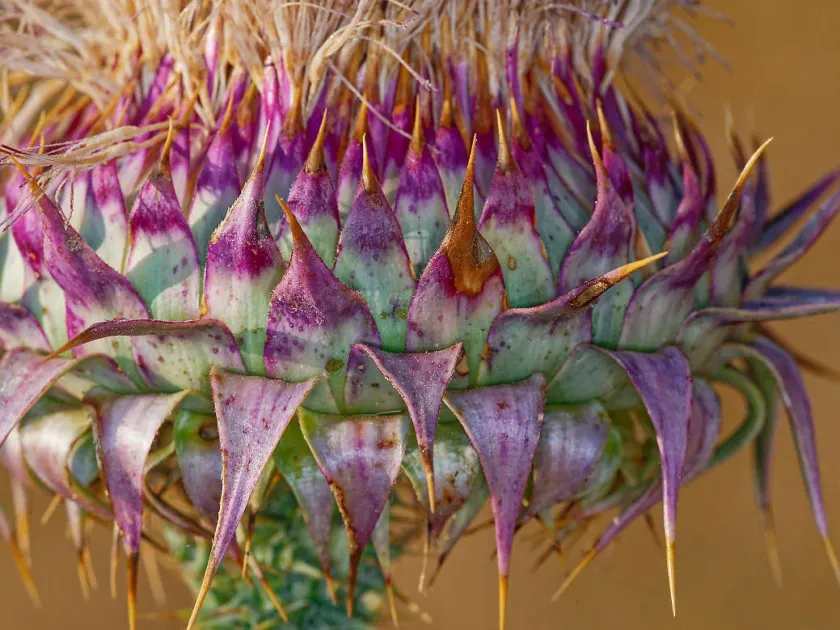
Onopordum laconicum is a striking biennial species of the Asteraceae family, valued for its architectural presence and silver-foliaged rosettes. In its first year, it develops a large basal rosette, while in the second year, it produces a tall, branching flower spike.
Seeds are typically sown in spring once the danger of hard frosts has passed. They should be planted at a shallow depth of 1-2 centimeters in well-draining, loose soil to facilitate consistent moisture levels during the germination period.
For earlier establishment, starting seeds indoors in individual pots during early spring is recommended. This method prevents disturbance to the taproot, which is sensitive to transplanting, ensuring healthier growth upon transfer to the garden.
Adequate spacing is crucial for this vigorous plant; a distance of at least 70-80 centimeters between specimens ensures good airflow and prevents overcrowding. Proper spacing is essential for the plant to reach its full aesthetic potential.
Thinning out weaker seedlings is necessary to encourage the development of strong, robust rosettes. This early-stage management sets the stage for a healthy second-year growth phase and prevents competition for essential soil nutrients.
Growing requirements
This plant thrives in full sun exposure and is highly intolerant of shade, which causes the stems to become weak and the foliage to lose its characteristic color. Selecting a sunny, open location is the most important factor for success.
Onopordum laconicum prefers light, well-draining soils with a neutral to slightly alkaline pH. It is highly drought-tolerant, so heavy, water-retentive clay soils should be amended with grit or sand to provide the necessary drainage for its roots.
Watering should be minimal and restricted to periods of severe, prolonged drought during the summer months. Overwatering is generally more detrimental than underwatering, as it can quickly lead to root rot in poorly drained conditions.
Feeding is rarely necessary if the soil is reasonably fertile, but a light application of balanced fertilizer early in the growing season can boost flower production. Excessive nitrogen should be avoided to prevent leggy, unstable growth.
Maintaining a weed-free area around the base is vital during the first year of development. Once the plant reaches maturity and the large leaves cover the ground, it becomes effective at suppressing the growth of competitive weeds.
Main diseases and pests
The plant is generally resilient, but excessive humidity can lead to fungal issues such as powdery mildew. Proper air circulation and adequate sunlight are the primary preventative measures against these common infections.
Aphids can occasionally cluster on the flower buds and young foliage, causing stunted growth. Management involves using standard insecticidal sprays or natural oils, applied at the first sign of an infestation to prevent spread.
Root rot is the most significant threat, almost exclusively caused by waterlogged soils or standing water during the winter. Ensuring perfect drainage at the time of planting is the most effective way to avoid this fatal issue.
Spider mites may become a problem during very hot, dry weather conditions, causing leaf yellowing and reduced vigor. Monitoring the underside of leaves for small webs or discoloration allows for early intervention with miticides.
A good rotation plan is advisable for those growing large numbers of plants, avoiding sites where other members of the Asteraceae family were previously cultivated to prevent the buildup of soil-borne pathogens.
Harvesting
Onopordum laconicum is widely appreciated in the floral industry as a high-quality dried flower. Harvest should take place when the flowers are fully open but before they begin to shed their seeds or show signs of fading.
For optimal drying, stems should be hung upside down in a dark, dry, and well-ventilated space. This process preserves the structural integrity of the seed heads and the silver tone of the foliage, allowing for long-lasting decorative arrangements.
Seed collection is performed in late summer when the seed heads turn brown and become dry to the touch. It is important to harvest before the seeds are naturally dispersed by the wind, which is a common occurrence with this species.
Deadheading spent flowers during the season can extend the plant's decorative life and prevent unwanted self-seeding in unwanted parts of the garden. This helps maintain the overall neatness of the landscape design.
The remains of the plant, once finished, can be composted if the material is healthy and free of pests. Shredding the thick stalks helps speed up the decomposition process, recycling nutrients back into the garden soil.