
Onopordum cynarocephalum
Onopordum cynarocephalum
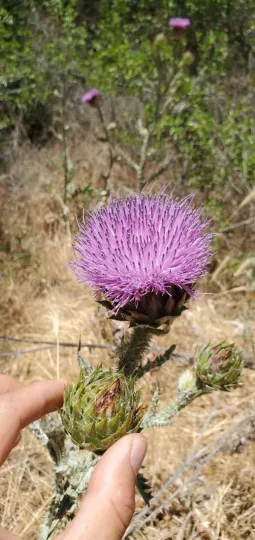
Description
Sowing dates
The sowing of Onopordum cynarocephalum is preferably conducted in the spring, once the soil has warmed to a temperature of 10–12 degrees Celsius. This plant belongs to the Asteraceae family and often acts as a biennial, requiring stable temperature conditions during the early stages of vegetation.
The optimal time for field sowing is mid-April, which allows the seeds to utilize the moisture reserves remaining from snowmelt. The planting depth should be 2–3 centimeters, as small seeds require close contact with moist substrate for successful germination.
For large-scale cultivation, it is essential to follow a planting pattern that ensures sufficient feeding space. A recommended distance between rows is 60–70 centimeters, which facilitates maintenance and mechanized inter-row cultivation.
To accelerate emergence, pre-sowing stratification or soaking in growth stimulants is recommended. Uniform sprouts typically appear 14–20 days after sowing, after which thinning is required to prevent overcrowding.
In regions with mild climates, late-autumn sowing is possible, although it carries risks of freezing during sudden temperature fluctuations. In such cases, sowing is performed just before the onset of permanent cold weather to prevent premature germination in the autumn.
Growing requirements
Onopordum cynarocephalum prefers well-lit areas, as it is a light-demanding plant. Under shaded conditions, the development of the basal rosette slows down, which directly affects subsequent biomass and flowering.
The crop has moderate requirements regarding soil conditions, favoring fertile loam or sandy loam soils with a neutral pH. It is crucial to ensure good drainage, as waterlogging is detrimental to the plant's powerful root system.
The plant possesses high drought resistance due to a taproot capable of penetrating deep into the soil. However, regular irrigation during critical growth periods is required to achieve high yields of green mass.
The optimal temperature for active vegetative growth is 20–25 degrees Celsius. The crop can withstand temporary cold spells; however, sudden frost during the active growth phase may damage young leaves.
Good precursors for this crop include row crops, cereals, or clean fallow. It is not recommended to plant in the same area more frequently than once every 4 years to avoid the accumulation of specific pathogens in the soil.
Yield
The yield of Onopordum cynarocephalum green mass depends on the agrotechnical background and moisture availability during the period of intensive leaf development. In favorable conditions, yields can reach 200–300 centners per hectare.
The greatest value of the crop lies in the accumulation of biologically active substances. For medicinal purposes, both the aerial parts and the roots are harvested, with root yields depending directly on the plant's age and soil structure.
For seed production, yields are approximately 5–8 centners per hectare, provided crop purity is maintained. Seed collection is conducted when the flower heads turn brown to minimize losses from shedding during maturation.
Economic use includes the application of the culture as a forage resource at early stages, as well as a honey plant. The high sugar content in its nectar makes it attractive to bees in mid-summer.
Cultivation efficiency is increased by applying moderate doses of nitrogen-phosphorus fertilizers. Excessive nitrogen feeding may lead to excessive vegetative growth at the expense of seed quality or the accumulation of active ingredients.
Main diseases and pests
Typical diseases for Onopordum cynarocephalum include fungal infections such as powdery mildew and various types of rust. These are more common in years with high humidity and poor ventilation of the plantings.
Among pests, leaf-eating insects and aphids pose the greatest threat, as they can damage the leaf rosette during early stages. During the flowering period, flower heads are frequently attacked by weevils and seed-eaters.
To control pests, biological protection methods or systemic insecticides are used if the infestation reaches a significant scale. It is important to observe waiting periods before harvest if the raw material is intended for medicinal use.
Disease prevention consists of strictly adhering to crop rotation and timely removal of plant residues after harvest. Healthy seed material is the key to ensuring the resilience of future generations against pathogens.
Weed interference during the initial period of vegetation represents a serious threat. Regular weeding and mulching of rows help the crop form a competitive rosette faster and suppress weed growth.
Harvesting
Harvesting the aerial parts of Onopordum cynarocephalum is performed during the peak flowering phase, when the concentration of biologically active substances is at its maximum. The use of mechanized mowers allows for efficient harvesting of large areas.
After mowing, the material requires immediate drying under a canopy or in specialized dryers at temperatures not exceeding 45 degrees. Ensuring free airflow is vital to preserve the color and quality of the medicinal components.
The roots are harvested in the autumn when the vegetation period ends, or in early spring before leaf growth begins. They are cleaned of soil, washed in running water, and cut into fragments for rapid drying.
When harvesting seeds, one must wait for the flower heads to turn brown, after which they are cut by hand or by combine. Threshing is performed after pre-drying the heads, which reduces seed moisture to 12–14 percent.
Finished raw material is stored in dry, well-ventilated rooms in paper bags or wooden boxes. The shelf life of properly dried material is up to two years without significant loss of medicinal properties.