
Olyra latifolia
Olyra latifolia
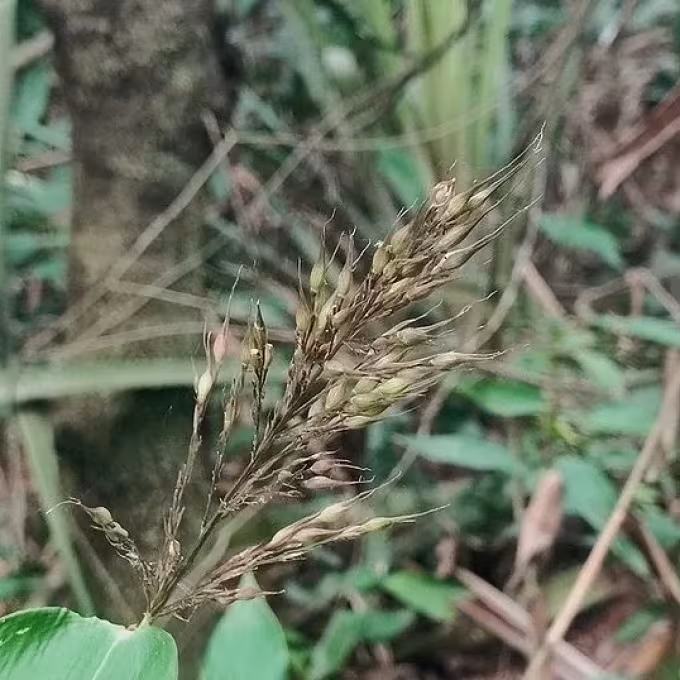
Description
Growing requirements
Olyra latifolia is a perennial grass species belonging to the family Poaceae and the subfamily Bambusoideae. This plant is known for its bamboo-like appearance, forming dense clusters of upright stems.
Originating from the tropical regions of the Americas and Africa, the plant thrives in humid forest environments. It is frequently found in understory habitats where light is filtered and moisture is consistent.
The climate requirements for Olyra latifolia are strictly tropical. It demands year-round warmth and high humidity, making it unsuitable for cultivation in temperate or cool zones.
Soil conditions should favor well-drained, nutrient-rich substrates. The plant is particularly sensitive to waterlogging, although it prefers consistently moist soil throughout the active growing season.
In terms of usage, the tough and resilient stems of Olyra latifolia are widely utilized by local communities for weaving baskets, making artisanal fishing tools, and creating decorative items.
Main diseases and pests
Fungal leaf spot diseases are the primary threat to the foliage, especially in areas with stagnant air and high moisture levels.
Various sucking insects, such as aphids and spider mites, are common pests that can severely weaken young plants if left unmanaged.
Root rot becomes a significant concern when the plants are grown in heavy or poorly draining soils during the rainy season.
Invasive weeds can quickly outcompete Olyra latifolia in the initial establishment phase, requiring manual weeding or mulching.
Integrated pest management strategies focusing on thinning the foliage and ensuring good airflow are essential for maintaining healthy plantations.