
Olimarabidopsis pumila
Olimarabidopsis pumila
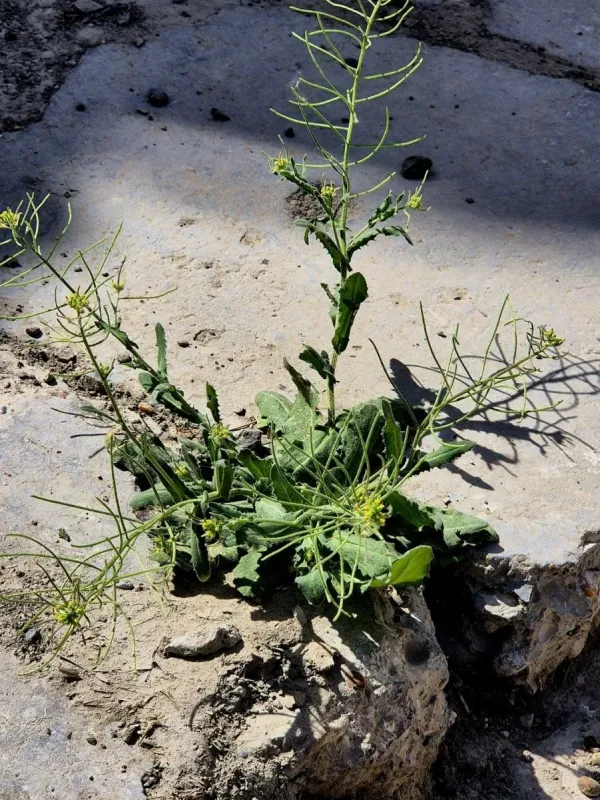
Description
Sowing dates
Olimarabidopsis pumila acts as a typical ephemeral, with germination typically occurring immediately after the winter snowmelt when soil temperatures begin to rise.
The seeds demonstrate high germination energy, allowing the species to establish itself rapidly in open, disturbed soil patches during early spring.
Sufficient soil moisture, retained from the winter season, is the primary requirement for successful emergence and early establishment of the rosettes.
The life cycle is compressed into a very short window, ensuring the plant completes its development before higher-growing crops shade the soil surface.
Natural reseeding is efficient due to the rapid dehiscence of pods, which scatters seeds across the field before the primary crop reaches its main growth stage.
Growing requirements
As a member of the Brassicaceae family, this species thrives in well-drained, sandy, or rocky soils, showing remarkable resilience to low nutrient levels.
It prefers full sun exposure to maximize photosynthetic activity during its brief vegetative period, which is essential for its quick reproductive cycle.
The plant is highly drought-tolerant, utilizing its physiological adaptations to survive in environments where moisture is limited outside the spring season.
No specific soil tillage or fertilization is required for its growth, as it is an opportunistic species that occupies marginal or disturbed lands effectively.
Climatic preferences include temperate regions with a distinct transition from moist, cool springs to drier, warmer summer conditions.
Main diseases and pests
Like many cruciferous plants, Olimarabidopsis pumila can be susceptible to common diseases such as powdery mildew or clubroot in favorable moist conditions.
The species can harbor viral pathogens that pose a threat to commercially grown brassica crops, including canola, mustard, and various cabbages.
Flea beetles are the most significant insect pests, often causing severe damage to seedlings during periods of dry and warm spring weather.
While the plant's impact is often localized, it can host populations of aphids and other crucifer-specialized pests that migrate to nearby crops.
Effective management includes standard mechanical tillage and the application of herbicides during the early stages of winter crop development to prevent infestation.