
Chatham Island daisy
Olearia chathamica
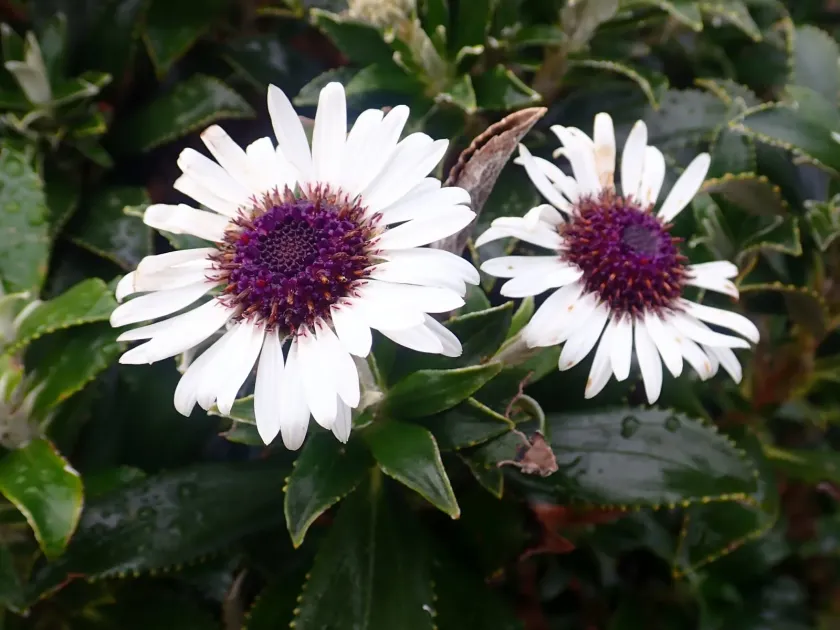
Description
Growing requirements
The Chatham Island daisy, scientifically known as Olearia chathamica, is a member of the Asteraceae family and is native to the Chatham Islands of New Zealand.
This species thrives in a temperate, maritime climate where humidity is high and temperature fluctuations remain relatively mild throughout the calendar year.
For successful cultivation, the plant requires moist, well-draining, and nutrient-rich soil to support its dense leaf production and spring flowering cycles.
Proper aeration is essential; therefore, planting in elevated beds or on slopes is often recommended to prevent waterlogging around the root collar.
While it is an evergreen shrub, it needs protection from heavy, drying winds, which can easily damage its large, leathery leaves and impact the overall shape.
Main diseases and pests
The plant is susceptible to various fungal pathogens when airflow is restricted or when the foliage remains wet for prolonged periods during cloudy days.
Root rot is the most significant threat to the Chatham Island daisy, typically caused by poorly drained soils or excessive irrigation during the dormant phase.
Common garden pests such as aphids and mealybugs can occasionally infest the growing tips, causing distortion of leaves and stunted growth in young specimens.
To maintain health, growers should monitor for signs of chlorosis or leaf spotting, which often indicate improper soil pH levels or nutrient deficiencies.
Integrated pest management strategies, including the use of horticultural oils or neem-based sprays, are effective for controlling common sucking insect infestations.