
Oldenlandia umbellata
Oldenlandia umbellata
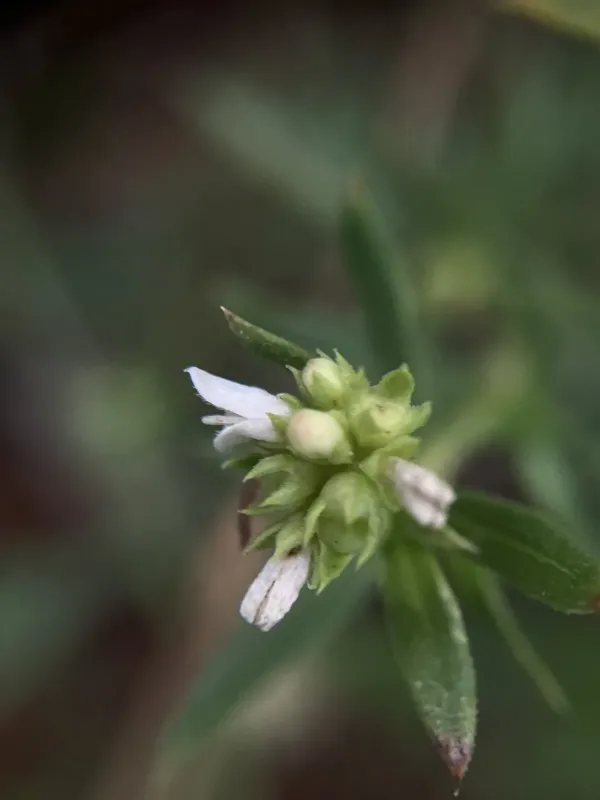
Description
Sowing dates
Oldenlandia umbellata, commonly known as Chay root, is a significant member of the Rubiaceae family. Historically grown in India, this crop is typically sown at the onset of the monsoon season when soil moisture levels are conducive to seed germination.
Seeds are broadcast directly into finely prepared soil, as the plant does not respond well to transplanting. The soil must be loose and free of debris to allow the tiny seeds to establish themselves effectively.
When sowing, it is advisable to mix the fine seeds with sand to ensure a uniform distribution across the field. Planting depth should not exceed 1 cm, as deeper placement can inhibit the emergence of delicate seedlings.
Germination usually takes about two weeks under warm conditions. Once the plants reach a few centimeters in height, thinning is performed to provide adequate space for the lateral development of the roots, which are the plant's main economic product.
While the plant is perennial, most commercial farms manage it as a biennial crop to maximize the yield of coloring agents accumulated within the root bark over time.
Growing requirements
The success of Oldenlandia umbellata cultivation heavily depends on soil structure. It thrives in well-draining sandy or loamy soils, as any waterlogging can quickly lead to root rot, destroying the entire crop.
The crop requires full sun exposure throughout its growth cycle. Insufficient sunlight directly correlates to a lower concentration of alizarin, the primary red dye component found in the roots.
Climatic requirements involve stable tropical or subtropical temperatures, ideally between 25 and 30 degrees Celsius. High atmospheric humidity is beneficial, provided that the soil drainage is managed correctly.
Neutral to slightly acidic pH levels are preferred. Soils that are too alkaline or heavily clay-based hinder root penetration and development, leading to stunted growth and lower harvest yields.
Low-impact organic fertilization is recommended to maintain soil fertility without causing excessive vegetative overgrowth. Balanced nutrient levels ensure that the plant redirects its energy into root system development.
Yield
The economic value of Oldenlandia umbellata is concentrated in its roots, which are harvested for the natural red dye they produce. Productivity depends on plant density and the duration of growth.
Two-year-old plants yield the highest quality dye material. Farmers monitor the crop maturity carefully to time the harvest when pigment density in the root bark is at its absolute peak.
Average yield figures reflect the careful management of soil and moisture. High-quality Chay root is distinguished by a deep reddish-brown color, which indicates high alizarin content.
Post-harvest processing includes cleaning and rapid drying to prevent degradation. A successful harvest is characterized by consistent root thickness and high levels of coloring potential for textile applications.
In addition to the dye industry, demand remains steady in traditional herbal medicine sectors, providing a dual-market advantage for growers who focus on organic cultivation practices.
Main diseases and pests
Root rot is the most devastating threat, primarily caused by poor drainage or excessive irrigation during the monsoon season. Preventive measures include elevated planting beds and proper field leveling.
Fungal leaf spot diseases can occur during prolonged wet spells. These infections weaken the plant by reducing the photosynthetic area, which indirectly impacts root growth and pigment accumulation.
Root-knot nematodes are common pests that attack the root system, causing galls and stunted growth. Infected plants must be removed and destroyed to prevent the spread of these microscopic pests.
Aphids can infest young shoots during dry intervals. While usually manageable with natural predators, localized outbreaks may require organic-approved horticultural soaps to protect plant vigor.
- Implementation of strict crop rotation protocols.
- Use of certified pathogen-free seeds.
- Regular monitoring of root health.
- Weed management to reduce competition for nutrients.
Harvesting
Harvesting is performed by carefully digging up the roots. Because the coloring agent is primarily in the bark, it is essential to avoid mechanical damage or snapping of the roots during extraction.
The optimal time for harvest is at the end of the second year, once the leaves begin to yellow. This indicates that the plant has ceased active top-growth and focused all resources into the root system.
Once lifted, the roots must be thoroughly washed to remove all soil particles. Any remaining dirt can compromise the purity of the dye extracted during the subsequent industrial processing.
Drying is a critical stage that must be performed in the shade. Direct UV radiation causes the photosensitive pigments in the roots to break down, significantly reducing the commercial value of the dye.
Once dried, the roots are sorted and bundled for transport. Proper storage in cool, dry conditions is necessary to maintain the integrity of the dyes until they reach the processing facility.