
Oldenlandia tenelliflora
Oldenlandia tenelliflora
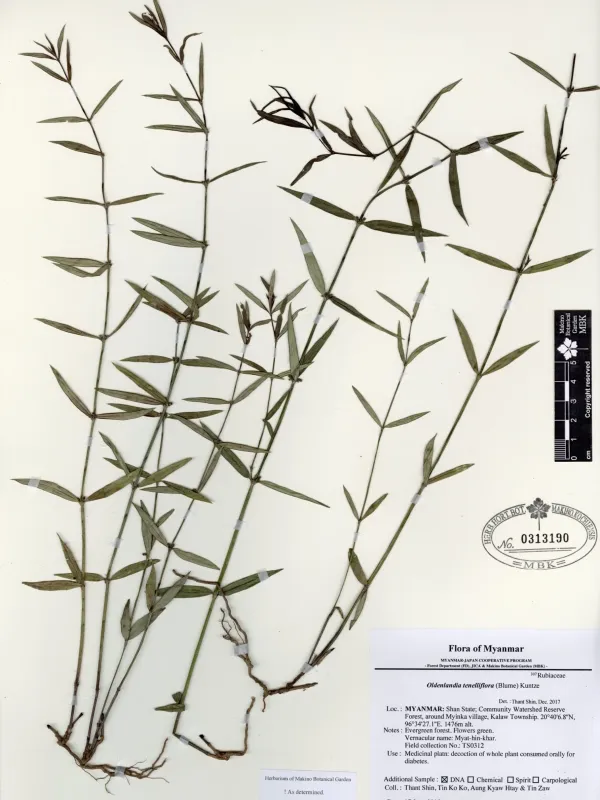
Description
Growing requirements
Oldenlandia tenelliflora belongs to the Rubiaceae family, a diverse group of plants often associated with medicinal and economic utility. This species is native to tropical regions of Asia, thriving in warm and humid environments that support its perennial growth cycle.
Botanically, the plant is characterized by its delicate, slender stems and small, distinctive flowers. It typically grows as a low-lying herb, forming dense mats in its natural habitat. It has adapted to thrive in light-dappled environments rather than direct, harsh sunlight.
The crop requires soils with a high organic matter content and a slightly acidic to neutral pH level. Proper drainage is essential to prevent waterlogging, as the root system is highly susceptible to hypoxia if kept in saturated soil for extended periods.
Climate requirements for Oldenlandia tenelliflora center on consistency. Temperatures between 22 and 28 degrees Celsius are ideal for active development. Frost or sustained cold weather is detrimental and will cause immediate cellular damage to the herbaceous parts of the plant.
Agricultural management should focus on soil moisture retention and weed control. Since the plant has a relatively shallow root system, shallow cultivation or mulching is recommended to suppress competing flora without disturbing the crop's nutrient uptake network.
Main diseases and pests
The primary threats include fungal pathogens such as Pythium and Rhizoctonia, which target the root system in poorly drained soils. Preventive measures include crop rotation and ensuring adequate air circulation within the planting rows.
Insect pests include aphids and mites, which are particularly prevalent during dry spells. Integrated pest management using organic-certified neem oil or similar biological agents is recommended for maintaining plant health.