
Oldenlandia lancifolia
Oldenlandia lancifolia
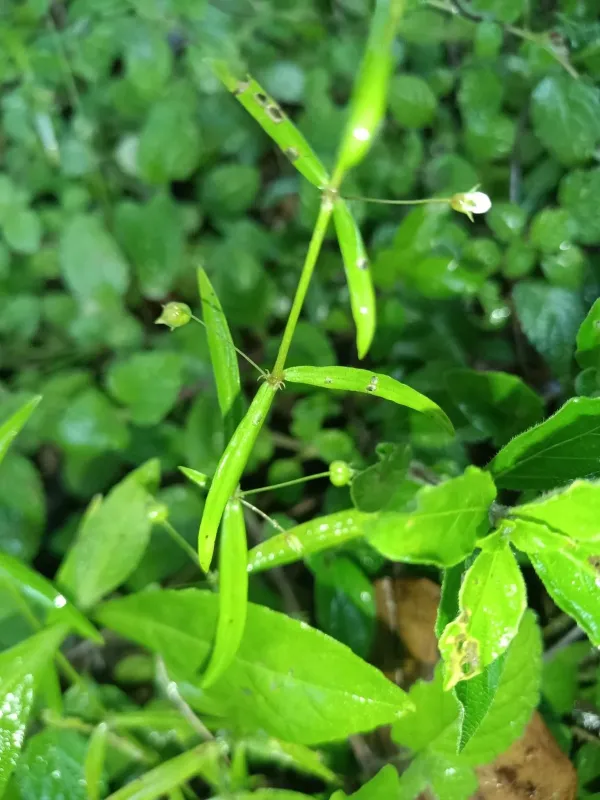
Description
Sowing dates
Oldenlandia lancifolia is a herbaceous plant within the Rubiaceae family, widely recognized for its medicinal properties in traditional practices. In its natural tropical habitat, propagation is achieved through seeds, which require specific conditions for germination.
To sow effectively, growers must use a finely textured, moist medium. Since the seeds are minute, they are sown on the surface and pressed gently to maintain contact with the substrate without being buried too deep, as light exposure is vital for the germination process.
The optimal germination period occurs in temperatures between 22°C and 25°C. Providing consistent humidity is essential, and covering the seed trays with clear plastic can help create the micro-climate required for successful establishment.
Seedlings should be thinned carefully once they reach a height of 3-5 centimeters to ensure adequate airflow. High planting density is often linked to the development of fungal pathogens, so maintaining correct spacing is a crucial agricultural management practice.
In temperate zones, sowings should be performed in heated greenhouses or growth chambers where temperature and day length can be strictly controlled to mimic tropical cycles.
Growing requirements
Oldenlandia lancifolia thrives in environments that provide high humidity and consistent soil moisture. It is best adapted to nutrient-rich, loamy soils that possess excellent drainage qualities while retaining enough water to support continuous growth.
The plant requires plenty of sunlight to synthesize its active compounds, although in equatorial regions, some shade during the hottest part of the day prevents leaf scorch. Proper light management ensures the production of vigorous, healthy biomass.
A soil pH ranging from 5.5 to 6.5 is ideal for the uptake of macro and micronutrients. Organic amendments, such as compost or well-rotted manure, should be integrated into the soil prior to planting to boost soil fertility.
Watering must be frequent but managed to prevent waterlogging. The use of drip irrigation systems is highly recommended in large-scale production to provide precise hydration to the root zone without wetting the foliage excessively.
Maintaining a stable temperature regime is paramount. Prolonged exposure to temperatures below 18°C can induce dormancy or cause severe stunted growth, significantly reducing the final yield of the crop.
Main diseases and pests
The primary threats to Oldenlandia lancifolia are soil-borne fungal pathogens such as Pythium and Phytophthora, which thrive in waterlogged conditions. Proper irrigation management is the most effective preventative measure against these diseases.
Leaf-spotting fungi can also affect the crop during rainy seasons with high humidity. Ensuring adequate spacing between plants allows for better ventilation, which lowers the humidity around the leaf surface and inhibits fungal growth.
Pests, particularly aphids and spider mites, can quickly colonize the plant during dry spells. These pests damage the young, tender foliage and can transmit various plant viruses, necessitating early detection and intervention.
Root-knot nematodes can pose a significant risk, especially in soil that has been used for continuous cultivation. Practicing crop rotation is essential to maintain soil health and suppress nematode population growth.
Farmers should prioritize integrated pest management (IPM) strategies, favoring biological controls to ensure that the medicinal output remains free from synthetic chemical residues.