
Odontadenia
Odontadenia
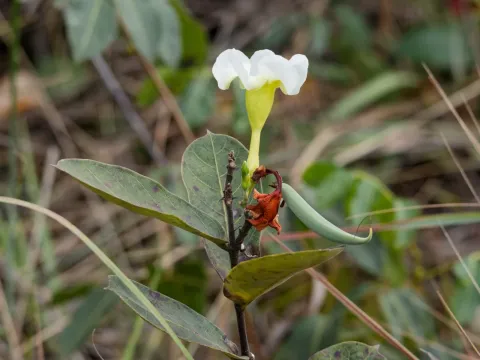
Odontadenia is a genus of evergreen woody vines belonging to the Apocynaceae family. Native to the tropical regions of Central and South America, these plants are known for their vigorous climbing habit and large, showy, fragrant flowers.
What the section contains

Odontadenia
These plants are highly sensitive to thermal conditions, thriving in tropical environments with consistent temperatures between 22°C and 28°C. They are strictly non-hardy and must be cultivated in protected environments such as greenhouses in temperate climates.
Light management is crucial for the successful growth of Odontadenia. The plants prefer bright, indirect sunlight throughout the year; intense direct sunlight can scorch their large, leathery leaves, while insufficient light leads to poor flowering performance.
The substrate must be highly porous and rich in organic matter. A well-draining potting mix, typically composed of peat moss, pine bark, and perlite, is essential to prevent water stagnation, which can rapidly damage the roots of this species.
Maintaining high relative humidity is vital for the health of Odontadenia. Regular misting or the use of humidifiers in the growing environment mimics their natural rainforest habitat and helps prevent the leaf tips from drying out.
In indoor or greenhouse settings, Odontadenia is frequently targeted by common sucking pests. Spider mites are particularly problematic during warmer months or in environments with low humidity, causing yellow stippling on the leaves.
Mealybugs and scale insects represent significant threats to the vine. These pests tend to congregate in the axils of the leaves and along the stems, weakening the plant and promoting the growth of sooty mold on the honeydew they excrete.
Root rot caused by Phytophthora or Pythium species is a major risk factor if the growing medium remains waterlogged for extended periods. This is often an indication of poor drainage or improper irrigation scheduling.
Fungal leaf spot diseases may appear if there is poor air circulation and excessive moisture on the foliage. To prevent this, it is recommended to maintain good ventilation and avoid wetting the leaves during the late hours of the day.
Integrated pest management, including regular inspection of the leaf undersides and the use of insecticidal soaps or systemic treatments, is necessary to keep the plant vigorous and free from infestations.