
Ochreinauclea missionis
Ochreinauclea missionis
Description
Growing requirements
Ochreinauclea missionis is a notable evergreen tree species belonging to the Rubiaceae family. The plant is botanically recognized for its distinct morphological traits typical of tropical forest flora, including leathery leaves and specific inflorescence structures.
The native distribution of this species is restricted to the Western Ghats of India. It thrives in high-rainfall tropical environments, where it forms an integral part of the riparian and moist evergreen forest canopy ecosystems.
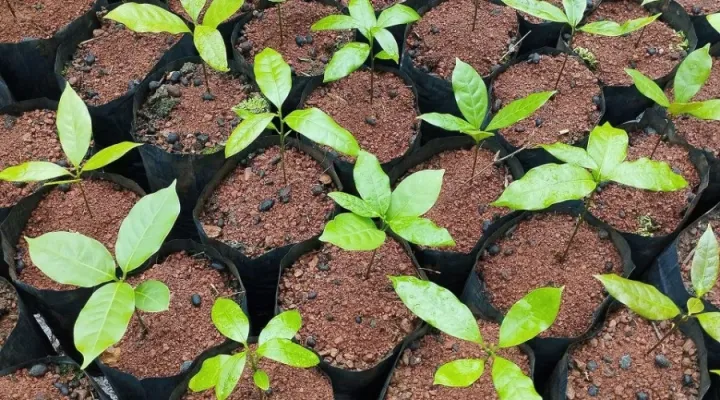
For successful cultivation, the species requires deep, fertile, and well-drained soils. High soil organic matter content significantly boosts growth rates, especially during the establishment phase, provided that the water table remains consistent but not waterlogged.
Climate requirements involve high annual temperatures and substantial humidity levels. Exposure to direct scorching sun in early development stages can be detrimental; thus, plantation management usually involves establishing an appropriate nursery canopy or shading systems.
The economic value of this tree lies primarily in its timber, which is utilized in local woodworking industries. Furthermore, the species is considered a valuable candidate for ecological restoration projects aimed at enriching local tropical forest cover.