
Ochanostachys amentacea
Ochanostachys amentacea
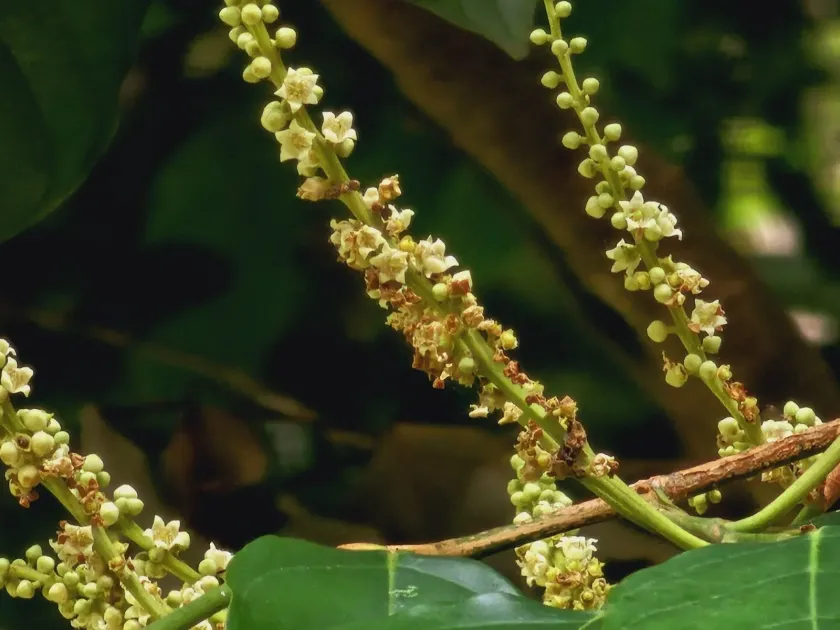
Description
Sowing dates
Ochanostachys amentacea is not a conventional field crop, but rather a wild-harvested or cultivated forest tree that reproduces primarily through seeds.
Seed longevity is relatively low; therefore, planting should occur immediately after harvest to ensure high germination rates in nursery conditions.
Seeds are sown in prepared nursery substrates at a depth of 3–5 centimeters to protect the sensitive embryo from desiccation in tropical heat.
Germination typically proceeds over several weeks, provided that moisture levels are kept constant and shading is applied during early developmental stages.
Once seedlings reach a sufficient size, usually 30–50 centimeters in height, they are transplanted into permanent locations within forest or agroforestry systems.
Growing requirements
This species belongs to the Olacaceae family and is recognized as a typical evergreen tree native to the tropical rainforests of Southeast Asia.
The tree thrives in deep, well-drained alluvial soils that are rich in organic matter, often found in river valleys and lower-slope forest areas.
Climate requirements include consistently high air humidity and tropical temperatures throughout the year, with no significant seasonal variations.
While young trees show some shade tolerance, mature specimens require sufficient canopy light to reach their full potential and maximize fruit production.
Successful cultivation depends on the preservation of natural soil ecosystems, particularly the mycorrhizal fungi essential for the tree's long-term nutrient uptake.
Yield
The primary economic value of the tree lies in its seeds, which are consumed by local communities as a traditional source of dietary fats.
Yields of wild-growing trees vary significantly based on environmental conditions and the maturity of the tree, making commercial planning challenging.
The wood of Ochanostachys amentacea is highly regarded for its physical properties, including remarkable strength and resistance to decay and termites.
Integrating this tree into agroforestry projects provides long-term financial stability through the dual harvesting of timber and edible seeds over time.
Sustainable harvesting practices are crucial to maintain tree vitality and ensure continuous annual production of seeds within forest management frameworks.
Main diseases and pests
Major threats to this species include rapid deforestation and the conversion of forest land into intensive agricultural monocultures, which destroy its habitat.
Seed predation by forest rodents and other small mammals is a significant factor that can limit natural regeneration in the wild.
Fungal root diseases can emerge in plantation settings if drainage is poor, leading to water stagnation that compromises the tree's health.
While leaf-eating insects exist, significant pest outbreaks are rarely reported unless the ecosystem balance is severely disturbed by anthropogenic activity.
Protection of Ochanostachys amentacea stands requires ecological management that prioritizes native biodiversity over chemical pest control measures.
Harvesting
Harvesting typically follows the natural phenological cycle of the tree, where fruit collection occurs seasonally as the pods mature and fall.
Collection is mainly a manual process, as farmers gather the fruit from the forest floor after the pods naturally detach from the branches.
Once collected, the seeds must be removed from the fruit pulp and dried properly to prevent the growth of mold or fermentation during storage.
Speed is critical during the harvest phase, as leaving the fruits on the forest floor for too long increases the risk of contamination or premature decay.
Before consumption, the seeds undergo traditional cooking processes such as boiling or roasting, which improve their digestibility and flavor profile.