
Neuropeltis velutina
Neuropeltis velutina
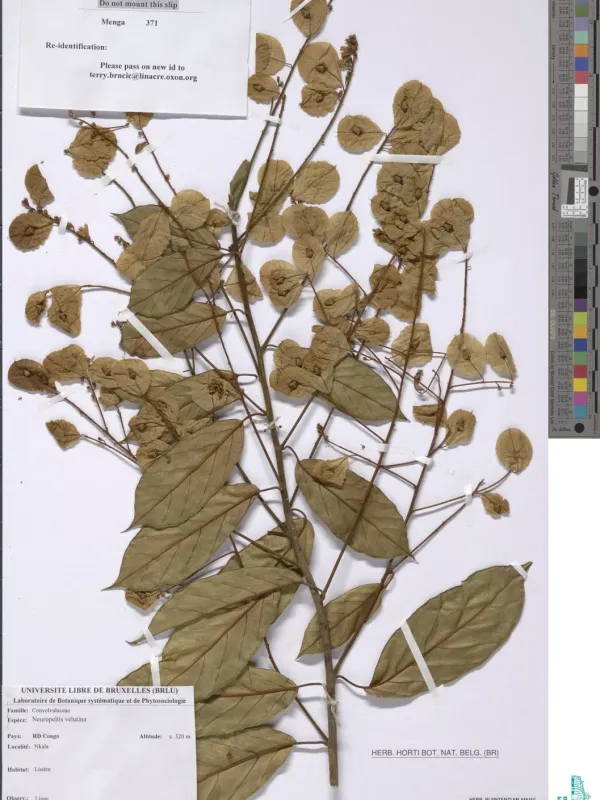
Description
Growing requirements
Neuropeltis velutina is a perennial woody climber belonging to the Convolvulaceae family. Unlike common bindweeds, this species develops thick, woody stems capable of reaching the upper canopy of tropical forests.
The plant is native to the tropical regions of Africa, where it thrives in humid evergreen forests. It relies on the architecture of forest trees to climb and expose its leaves to sunlight, which is vital for its energy synthesis.
Climate requirements involve high temperatures throughout the year without significant fluctuations. The plant demands high humidity levels, typical of rainforest ecosystems, to maintain its metabolic processes and avoid dehydration.
Soil preferences include nutrient-rich, deep organic substrates with excellent drainage. In its natural habitat, the plant grows in soils characterized by rapid decomposition of litter, providing a steady supply of essential minerals.
Cultivation practices require sturdy vertical structures to mimic the natural tree trunks the plant uses in the wild. Proper training of the stems during the initial growth phase is essential for optimal structural development.
Main diseases and pests
The primary threat to Neuropeltis velutina is the extensive deforestation occurring in its natural African range. Habitat loss significantly reduces the available surface for the vine to climb, leading to a decline in population.
Pathogenic fungi pose a risk during the peak of the rainy season. Excess moisture on the foliage can lead to fungal spotting and localized necrosis, which may spread if the plant is overcrowded in a nursery or garden setting.
Insect pests, particularly sap-sucking insects like mealybugs and aphids, often target the tender new growth of the vine. These pests can transmit viral pathogens that further weaken the plant's structural integrity.
Invasive weed species often outcompete young Neuropeltis specimens for space and sunlight. Without manual weeding or clearance, young vines are frequently smothered by faster-growing vegetation.
The loss of specific forest pollinators due to environmental changes can lead to decreased seed production, further threatening the long-term viability of the species in disturbed ecosystems.