
Netrium digitus
Netrium digitus
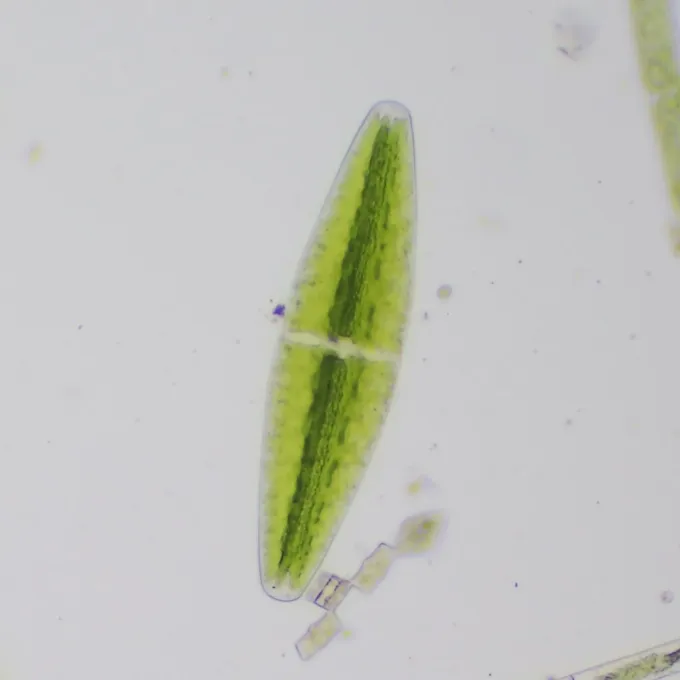
Description
Growing requirements
Netrium digitus is a species of unicellular green algae belonging to the Mesotaeniaceae family, classified within the group of conjugate algae. It is commonly found in freshwater habitats worldwide, typically thriving in acidic environments such as peat bogs and fens.
This organism is not classified as an agricultural crop but is significant in the study of phycology and aquatic biology. It acts as a natural component of the microflora in pristine, oligotrophic water bodies where nutrient levels are naturally very low.
The botanical structure of Netrium digitus consists of large, elongated, finger-like cells. Internally, the cells feature prominent axial chloroplasts, which are essential for its photosynthetic activities and overall energy production within its specialized niche.
In terms of environmental requirements, this alga strictly necessitates acidic water conditions and high levels of transparency. It is highly sensitive to eutrophication, making its presence a reliable bioindicator for assessing the health and purity of freshwater ecosystems.
Research on Netrium digitus contributes to our understanding of how microalgae adapt to fluctuating environmental conditions. By monitoring its distribution, scientists gain valuable data regarding the preservation and ecological shifts of bog and marsh habitats.