
Nerisyrenia camporum
Nerisyrenia camporum
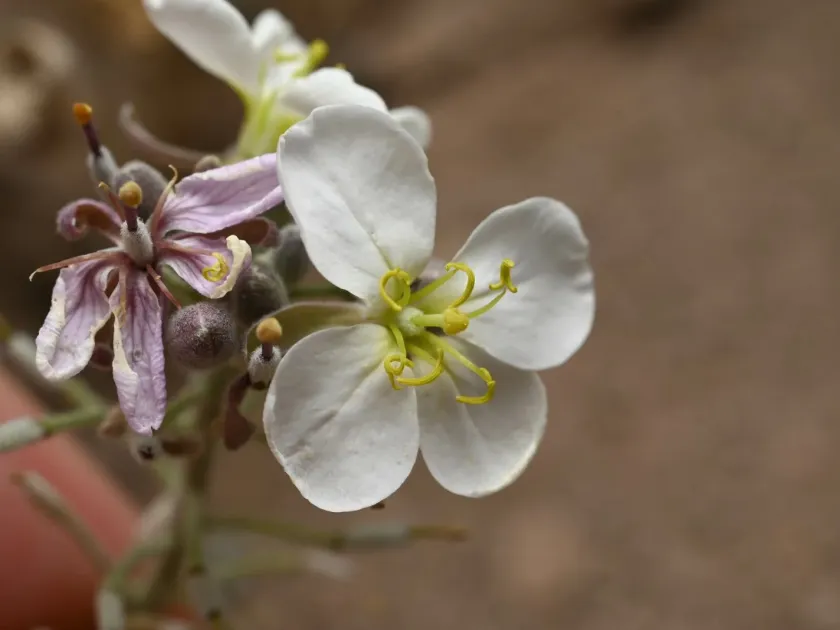
Description
Growing requirements
Nerisyrenia camporum is a drought-tolerant herbaceous plant belonging to the Brassicaceae family. It is native to the arid environments of North America, where it thrives in rocky and sandy soils that would be unsuitable for most traditional agricultural crops.
The plant exhibits remarkable xerophytic adaptations, including thick, narrow leaves that help reduce transpiration. Its root system is deep and expansive, allowing the plant to tap into scarce water resources during prolonged dry spells common in its habitat.
Optimal growth for this species requires well-drained, alkaline or neutral soils. It is particularly known for its tolerance to soil salinity, making it a subject of interest for land reclamation projects in degraded, saline-prone regions.
Exposure to full sunlight is essential for the metabolic processes of Nerisyrenia camporum. Insufficient light results in stunted growth and a significant reduction in the seed set, which is critical for its potential industrial or agricultural utility.
Climatic requirements are focused on heat stability. The plant thrives in high-temperature environments with low humidity, and it is highly sensitive to excessive moisture, which can cause physiological stress and inhibit healthy plant development.
Main diseases and pests
Due to its high concentration of defensive compounds such as glucosinolates, Nerisyrenia camporum possesses natural resistance against many insects and pathogens. These compounds serve as an effective chemical shield against herbivory.
However, like many Brassicaceae, it is susceptible to root-related diseases if planted in poorly drained soil. Soil aeration is the most important factor in preventing the development of soil-borne fungi that can jeopardize the plant's structural integrity.
Occasionally, young seedlings may face pressure from generalist herbivores, such as cutworms or flea beetles. Integrated pest management strategies, focusing on early monitoring and field sanitation, are typically sufficient to control these minor threats.
Leaf spot diseases may occur during unseasonably cool and wet periods. Ensuring proper row spacing to maximize air circulation is a standard agricultural practice to keep the foliage dry and mitigate the risk of fungal infections.
Maintaining biological diversity around the fields is recommended. By keeping surrounding areas free from invasive weeds, farmers can prevent the buildup of insect populations that might otherwise vector viruses to the crop.