
Neolamarckia cadamba
Neolamarckia cadamba (Roxb.) Bosser
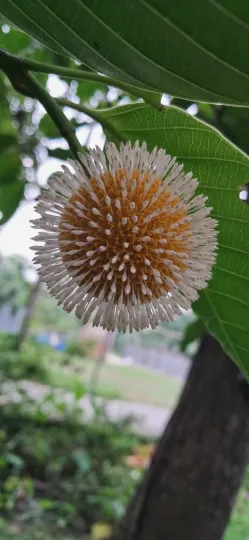
Description
Sowing dates
Neolamarckia cadamba, a member of the Rubiaceae family, is a fast-growing tropical species primarily propagated through seeds. Seeds must be sown in nurseries immediately after collection to ensure high viability, as they lose their germinating potential very quickly.
The optimal sowing time aligns with the start of the rainy season to benefit from natural humidity levels. Seedlings are kept in nurseries until they reach a height of 30–50 centimeters before being transplanted to the final site.
Careful site preparation is essential for successful establishment, including the creation of planting pits enriched with organic fertilizer. Planting density typically ranges around 2500 trees per hectare for commercial wood plantations.
In the nursery stage, seedlings are delicate and require protection from direct sunlight and moisture stress. The use of shade netting is a standard practice to ensure healthy, robust development before field transplantation.
Temperature control is crucial for initial growth, with a preferred range of 25–30 degrees Celsius. Maintaining these conditions in the nursery phase ensures that the plants are strong enough to withstand the environment once moved to the plantation.
Growing requirements
This species thrives in tropical climates with annual rainfall ranging from 1500 to 5000 millimeters. Neolamarckia cadamba is highly dependent on consistent soil moisture and cannot tolerate even short periods of drought.
The ideal soil for this tree is deep, fertile, and well-drained alluvial soil. While the tree loves water, it does not perform well in waterlogged conditions, which can lead to root rot and secondary infections.
Soil pH should ideally be maintained between 5.5 and 6.5. Alkaline soils can lead to chlorosis, where the tree struggles to absorb necessary micronutrients, significantly hindering its rapid growth rate.
The tree is light-demanding but benefits from side shade during its early years to protect the bark from intense heat. As it matures, it develops a dominant canopy that shades the ground and suppresses competing vegetation.
Environmental requirements strictly exclude areas with frost or cold snaps. Temperatures dropping below 10 degrees Celsius can cause severe damage or death to young trees, limiting its commercial cultivation to frost-free regions.
Yield
The defining characteristic of Neolamarckia cadamba is its incredible growth rate. In ideal conditions, the tree can reach heights of up to 15 meters within 6 to 8 years, making it highly attractive for short-rotation forestry.
Commercial harvesting is typically planned for an 8 to 12-year cycle. By this point, the wood has reached optimal density and physical characteristics for various industrial applications, including the production of furniture and plywood.
The annual stem diameter growth can reach 3 to 5 centimeters, contributing to high biomass accumulation. This high yield potential makes it a lucrative option for investors looking for rapid returns in the timber industry.
The wood is lightweight, soft, and easy to machine, which makes it suitable for matchsticks, packaging boxes, and paper pulp. Its versatility ensures a steady demand in the wood processing sector.
Beyond timber, the tree holds cultural and medicinal significance. Its fragrant, globe-shaped flowers are frequently used in the perfume industry, and various parts of the tree are utilized in traditional medicine practices.
Main diseases and pests
Root rot caused by fungal pathogens is a significant threat, especially in sites with poor drainage. Excessive water accumulation in the soil promotes the rapid spread of these pathogens, leading to plantation losses.
Leaf-eating insects and caterpillars can cause substantial defoliation during the growing season. Periodic monitoring and the targeted use of insecticides are necessary to maintain growth rates and tree health.
Stem borers are known to target weakened or stressed trees. Maintaining optimal soil nutrients and avoiding mechanical damage to the bark are the best preventative measures against these destructive pests.
Nematodes can inhibit the development of young seedlings in the nursery or newly established fields. Utilizing sterilized soil for nurseries and avoiding successive replanting in the same area can help mitigate this risk.
While weeds are a challenge during the first two years, the rapid growth and dense canopy of Neolamarckia cadamba usually render weed control unnecessary once the plantation reaches the sapling stage.