
Nutmeg tree
Myristica fragrans Houtt.
Description
Growing requirements
The nutmeg tree (Myristica fragrans Houtt.) is a tropical evergreen species belonging to the Myristicaceae family. Originally native to the Banda Islands in Indonesia, it requires specific climatic conditions that mirror its natural humid and warm habitat.
Successful cultivation depends on high average temperatures, ideally between 25°C and 30°C, and high humidity throughout the year. The tree is strictly intolerant to frost and cold winds, which can cause significant damage to the canopy and overall plant health.
Soil requirements for optimal growth include deep, well-draining loamy soils with a high content of organic matter. It thrives in soils with a pH ranging from 6.0 to 7.5, ensuring that the root system has access to necessary nutrients while preventing water stagnation.
Agricultural management requires regular mulching and moisture control. While the tree loves moisture, it is sensitive to waterlogging, necessitating proper drainage systems in plantations to prevent fungal infections in the soil layer.
The trees are typically grown from seeds or via grafting to ensure higher productivity and uniform fruit quality. Planting density is calculated to provide maximum light penetration and air circulation to every tree, which is vital for disease prevention.
Yield
The nutmeg tree is a long-term investment, with the first harvest occurring in the 7th to 9th year of life. A mature, healthy tree can produce thousands of nuts annually, and harvest cycles typically occur twice a year during the peak ripening periods.
Main diseases and pests
Key threats include fungal pathogens such as heart rot and various leaf spot diseases. Pests like the nutmeg moth and different scale insects are significant challenges that require integrated pest management strategies to protect the leaves and fruit quality.
Harvesting
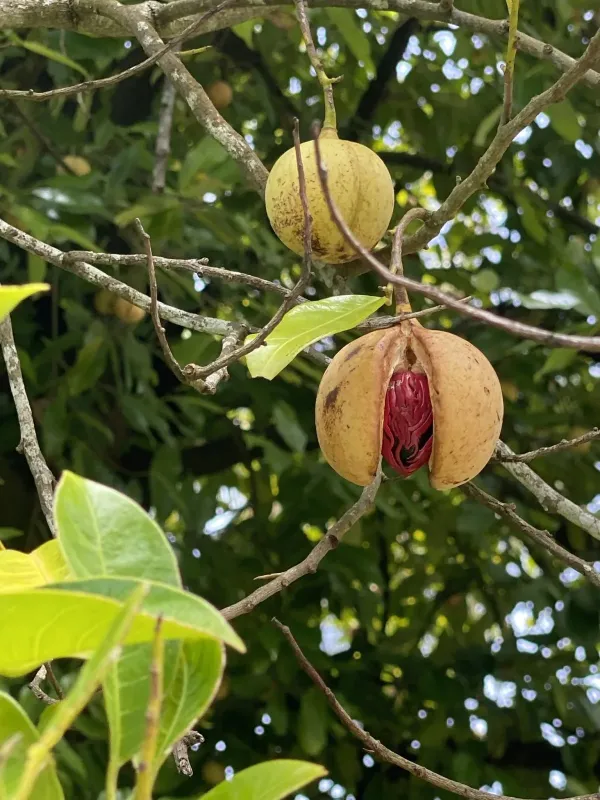
Harvesting involves manual labor to ensure that only fully mature, split fruits are gathered. The harvest is divided into three components: the pericarp, the lacy aril (mace), and the seed (nutmeg), each requiring distinct post-harvest processing methods.