
Soleirol's forget-me-not
Myosotis soleirolii
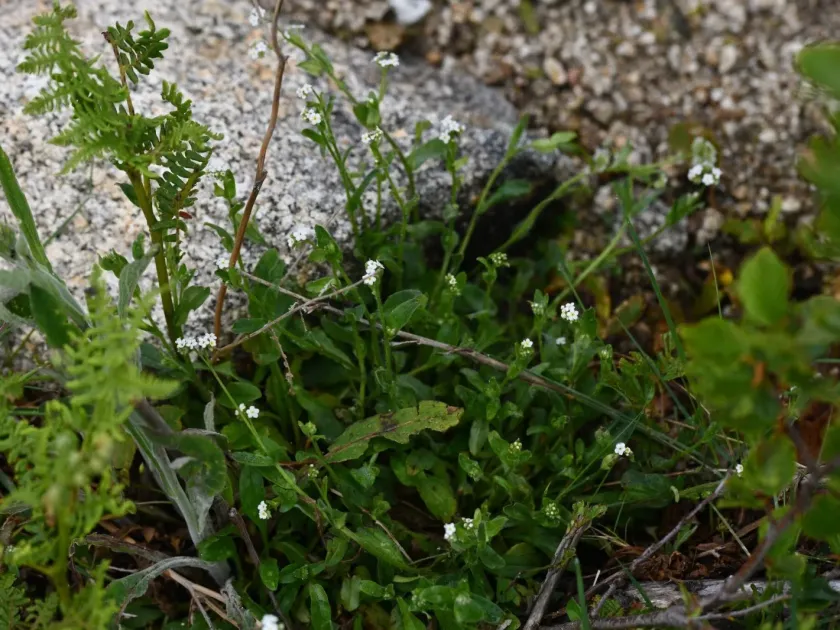
Description
Sowing dates
Sowing seeds of Myosotis soleirolii in temperate climates is typically performed in open ground during late spring or early summer, once the soil has warmed up sufficiently.
Late autumn sowing is also an option for promoting early blooming in the following season, allowing for natural seed stratification during winter months.
To speed up seedling production, seeds are sown in containers within greenhouses or bright indoor areas in February or March, maintaining constant moisture.
A crucial aspect is the sowing depth—seeds should be only lightly covered with soil or substrate, as many forget-me-not species require light to germinate effectively.
After the first true leaves emerge, seedlings are pricked out into individual pots or nursery beds to develop a strong root system before being moved to their permanent location.
Growing requirements
Soleirol's forget-me-not (Myosotis soleirolii) belongs to the Boraginaceae family and is native to the Mediterranean region, specifically Corsica and Sardinia.
The plant prefers areas with high humidity and protection from direct midday sun, as intense heat can be detrimental to its delicate leaf structure.
The ideal soil substrate should be loose, moisture-retentive, and possess a slightly acidic to neutral pH, which encourages robust vegetative growth.
In its natural habitat, the plant grows in cool, shaded environments, so providing regular irrigation without waterlogging is essential to prevent root rot.
A key success factor is the absence of extreme temperature fluctuations, making this species an excellent choice for damp garden areas and shaded rockeries.
Main diseases and pests
The primary threat to this crop includes fungal diseases that thrive in conditions of excessive humidity and poor air circulation.
Slugs and snails are common pests that actively feed on the succulent leaves, causing visible damage to the ornamental patches.
In dry weather, the plants may be susceptible to spider mites, so it is recommended to maintain optimal air humidity around the planting site.
Powdery mildew is also considered a typical pathogen occurring when agricultural practices are neglected, particularly in dense, poorly ventilated plantings.
To prevent these issues, it is essential to manage watering carefully, avoid waterlogging, and regularly clear debris from around the base of the plants.
Harvesting
The economic use of Myosotis soleirolii is strictly focused on landscaping and garden aesthetics, meaning there is no traditional harvest process for agricultural products.
At the end of the growing season, after flowering and seed maturation, patches can be pruned to rejuvenate the plant for the following year.
Seed collection is performed manually once the pods have matured on the stalks, which typically occurs mid-summer.
Collected seed material is dried in a well-ventilated, dark room, cleaned of debris, and stored in paper envelopes for the next sowing cycle.
Rhizomatous sections of the plant can be divided for vegetative propagation if necessary, a process usually coordinated with early autumn maintenance tasks.