
Fairy ring mushroom
Marasmius oreades
Description
Sowing dates
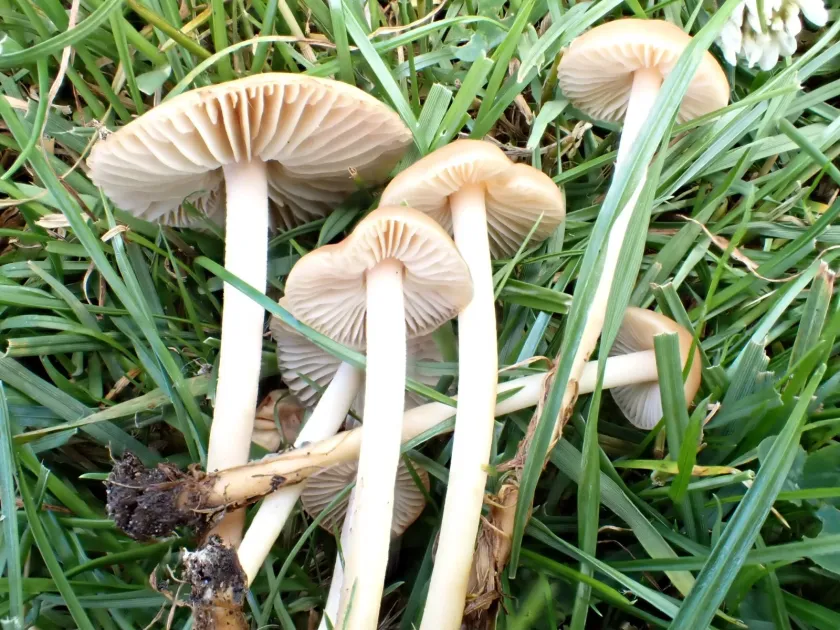
The Fairy ring mushroom (Marasmius oreades) belongs to the Marasmiaceae family. Unlike wood-decaying mushrooms, this species is a saprotroph that grows in soil and thrives within grassland ecosystems.
Cultivation involves introducing mycelium into well-drained, nutrient-rich turf. The best time for inoculation is late spring, when soil temperatures consistently reach optimal levels for fungal growth.
Inoculation points should be spaced approximately 30-40 centimeters apart, inserted into small holes in the soil, and covered with loose turf to protect the developing mycelium.
Establishing a symbiotic balance with native grass roots is crucial for the survival of the fungal colony, as the mycelium often interacts with the root zones of lawn grasses.
Once established, the mushroom naturally spreads through underground mycelial mats, eventually forming the characteristic circular patterns known as fairy rings.
Growing requirements
This species thrives in open, sunny, or partially shaded environments such as meadows, pastures, and well-maintained lawns where soil drainage is excellent.
The Fairy ring mushroom prefers light, sandy, or loamy soils with a neutral pH, as these conditions prevent the waterlogging that is detrimental to the mycelium.
Climatic requirements include moderate temperatures between 15 and 22 degrees Celsius and a consistent supply of moisture, particularly during the growth phases.
While resistant to mild droughts due to its ability to enter a dormant state, the fungus requires regular, moderate irrigation to produce a prolific yield of fruiting bodies.
Proper soil aeration is vital, as the fungus requires significant oxygen exchange to maintain the metabolic activity of its extensive underground network.
Yield
Yields are highly dependent on the size and maturity of the fairy ring. Larger, more established colonies provide a more consistent and abundant supply of mushrooms.
After significant rainfall or supplemental watering, the fungus produces flushes of fruiting bodies at regular intervals throughout the late spring to autumn months.
A single square meter of a healthy, dense mycelial mat can produce hundreds of mushrooms, making this an efficient species for productive garden cultivation.
Maintaining the integrity of the grass cover is essential, as the mushrooms depend on the organic debris and stable soil environment provided by the turf.
Careful management of soil nutrients—specifically avoiding excessive synthetic fertilizers—helps maintain the productivity of the colony over several growing seasons.
Main diseases and pests
The primary biological threats include soil-dwelling nematodes and various species of fungus gnats that can damage both the underground mycelium and the emerging mushrooms.
Excessive humidity can encourage the growth of competitive mold species, such as Trichoderma, which may outcompete the Fairy ring mushroom for nutrients.
Burrowing rodents, such as voles or moles, pose a significant physical threat, as their digging can destroy the underground mycelial networks established over years.
Chemical pollutants, including harsh herbicides or fungicides applied to nearby lawn areas, can cause systemic poisoning of the fungus, leading to its decline.
Improper drainage leading to stagnant water can facilitate bacterial rot, which quickly destroys the fruiting bodies and hampers future reproduction.
Harvesting
Harvesting is best performed by cutting the base of the stem with a sharp knife or by gently twisting the mushroom out of the soil to keep the mycelium undisturbed.
Avoid using metal rakes or heavy tools in the harvest area, as these can easily tear the delicate fungal threads near the surface of the soil.
The mushrooms should be cleaned immediately after harvest, removing any grass blades or dirt before they are prepared for drying, pickling, or cooking.
Fairy ring mushrooms are highly valued for their ability to be dried without losing their flavor; drying is a preferred preservation method that intensifies their aroma.
Frequent, light harvesting is encouraged, as it keeps the colony active and prevents the mushrooms from becoming overly mature and losing their culinary quality.