
Musineon divaricatum
Musineon divaricatum
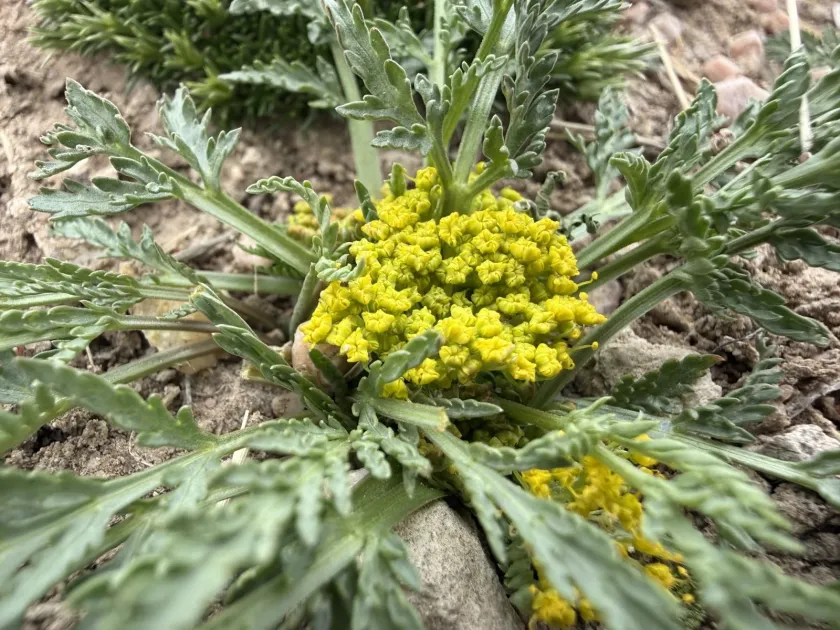
Description
Growing requirements
Musineon divaricatum, commonly known as leafystem musineon, is a perennial herb belonging to the Apiaceae family. It is native to the central parts of North America, particularly the dry prairies and rocky landscapes.
The plant exhibits high drought tolerance, which is supported by its deep taproot system. This botanical feature allows the species to access deep groundwater reserves during dry summer months in its natural habitat.
Regarding soil requirements, Musineon divaricatum thrives in well-drained, sandy, or rocky soils. It is intolerant of waterlogged conditions, which frequently result in physiological disorders and root system rot.
The climate requirement for this species involves exposure to full sun and significant temperature variation. It is a heliophyte, meaning that even partial shade will drastically reduce the growth rate and overall vitality of the plant.
Economically, the species is currently valued primarily for ecological restoration projects. Its ability to colonize degraded arid lands makes it a candidate for re-vegetation strategies in disturbed prairie environments.
Main diseases and pests
The main threats to the plant include fungal diseases such as root rot and powdery mildew. These occur primarily in high-humidity conditions or when soil aeration is compromised, leading to dampness.
Pests that target the Apiaceae family, including various species of aphids and specialized beetles, represent a potential threat to biomass production. They specifically target young shoots and flowers during the reproductive phase.
Invasive weeds are a constant challenge for Musineon divaricatum, particularly in the seedling stage. Competing plants can quickly outgrow and shade out the slow-growing seedlings if not properly controlled.
Mechanical damage to the taproot during cultivation or site maintenance poses a significant risk to the health of the individual plant. Once the main root is damaged, the plant struggles to recover from secondary infections.
Integrated pest management strategies are recommended, focusing on maintaining optimal soil moisture levels and early detection of pest populations to minimize the need for chemical intervention.