
Muraltia heisteria
Muraltia heisteria
Description
Growing requirements
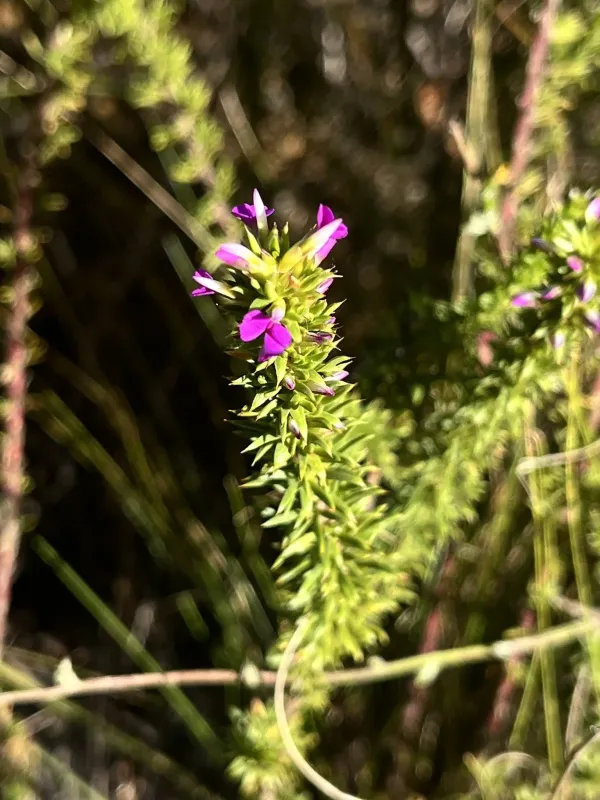
Muraltia heisteria belongs to the Polygalaceae family and is a characteristic evergreen shrub native to the fynbos biome of South Africa. It is known for its compact growth habit and needle-like foliage that creates a dense and textured appearance.
The plant thrives in well-drained, nutrient-poor, and slightly acidic soils. Its evolutionary adaptations, including narrow leaves, allow it to survive in arid conditions by reducing transpirational water loss significantly.
Environmental requirements for successful growth include plenty of direct sunlight and excellent soil aeration. It does not tolerate heavy, waterlogged clay soils, which typically lead to rapid root decay and death of the plant.
Regarding climate, this species prefers regions with Mediterranean-like patterns: wet, cool winters and dry, warm summers. It has low tolerance for hard frosts, making it suitable only for specific sheltered garden locations or temperate greenhouse environments.
Cultivation practices focus on mimicking its natural habitat. Regular pruning is recommended to maintain shape and promote bushiness, while irrigation should be kept at a minimal level once the plant is established.
Main diseases and pests
Root rot is the most common threat, primarily caused by over-irrigation or inadequate drainage. Preventing this requires careful monitoring of the moisture levels in the root zone during the winter months.
Insect pests such as aphids often colonize the fresh tips of the branches. If left unmanaged, these pests can stunt the growth of new foliage and reduce the ornamental appeal of the shrub.
Spider mites are another common nuisance in hotter, drier conditions. They damage the foliage by piercing the surface cells, leading to a mottled appearance that requires prompt acaricide treatment.
Nutritional imbalances, particularly chlorosis, can occur if the soil pH deviates from the plant's preferred range. Maintaining proper acidity levels is crucial for optimal nutrient absorption and plant vitality.
Powdery mildew can manifest in environments with poor air circulation. Ensuring the plant has enough space from neighboring shrubs helps to minimize the risk of fungal outbreaks in the dense foliage.