
Mora excelsa
Mora excelsa Benth.
Description
Growing requirements
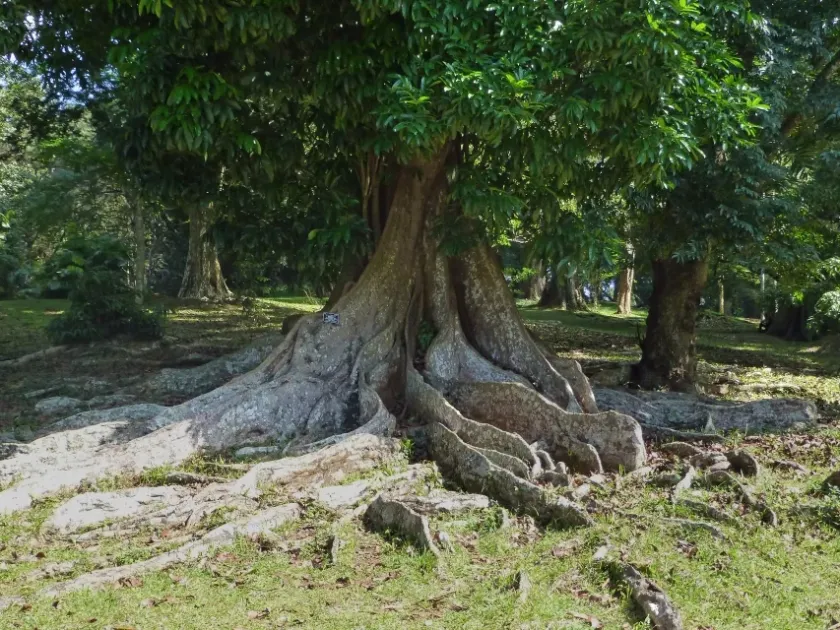
Mora excelsa is a large evergreen tree belonging to the Fabaceae family. In its natural habitat, this plant can reach heights of up to 40–50 meters, developing a massive trunk supported by distinctive buttress roots that provide structural stability in tropical forest environments.
This crop is a native species of the tropical rainforests of South America, primarily occurring in Guyana, Suriname, and Trinidad. The tree thrives in humid conditions and is typically found along riverbanks and in swampy, lowland areas characterized by nutrient-rich alluvial soils.
The culture requires consistently high temperatures throughout the year and significant rainfall. Mora excelsa is extremely sensitive to drought stress; therefore, successful growth depends on maintaining a stable moisture supply and avoiding prolonged dry periods during the developmental stages.
Soil requirements involve alluvial sediments that provide high fertility and excellent moisture retention. The tree is well-adapted to periodic flooding, an evolutionary trait that allows it to survive in flood-prone river basins where water levels rise seasonally.
The primary economic use of Mora excelsa is the production of high-value timber. The wood is renowned for its exceptional hardness, durability, and natural resistance to decay, making it a preferred material for shipbuilding, heavy construction, and industrial-grade flooring.
Main diseases and pests
The main threats to Mora excelsa stands include specialized pests that attack tropical leguminous species, such as wood-boring insects and seed-damaging beetles. In young plantations, the trees may be susceptible to root-rot pathogens if soil drainage is poor or if the root systems are damaged during cultivation.