
Puka
Meryta sinclairii (Hook. f.) Seem.
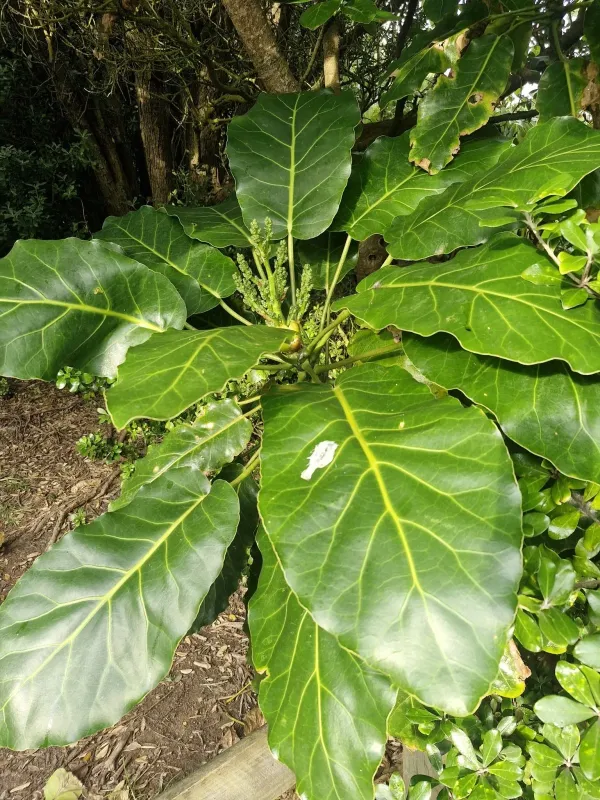
Description
Growing requirements
Puka (Meryta sinclairii) is a prominent member of the Araliaceae family, celebrated for its large, glossy, and lush foliage. Native to the Three Kings Islands of New Zealand, this evergreen tree can reach several meters in height when grown in optimal conditions.
The plant thrives in a maritime climate, preferring environments that are stable in terms of temperature and humidity. It is naturally adapted to sheltered coastal habitats, meaning it requires protection from harsh winds and extreme temperatures in agricultural or garden settings.
For successful growth, Meryta sinclairii requires bright, filtered light. It is sensitive to intense direct sunshine, which can scorch its tender leaves. Keeping the plant in a spot that receives morning light or bright ambient light is the preferred cultivation method.
Soil composition must be rich in organic matter and possess excellent drainage capabilities. The plant cannot tolerate "wet feet," so ensuring that the planting medium is light and porous is essential for maintaining root health and preventing physiological stress.
In terms of usage, the Puka is primarily utilized as an ornamental plant. It serves as a striking focal point in landscaping within subtropical zones and is a popular choice for large-scale interior design, greenhouses, and conservatory displays globally.
Main diseases and pests
Typical pests that affect Puka include common greenhouse insects such as mealybugs, aphids, and spider mites. These pests thrive in dry environments where natural humidity is insufficient, stressing the plant and reducing its ornamental quality.
Pathogenic threats are usually linked to over-irrigation. Root rot is the most common condition caused by fungal pathogens that flourish in waterlogged soils, potentially leading to rapid wilting and collapse of the plant structure.
Pest management involves regular inspection of leaf undersides and the use of horticultural oils or mild systemic insecticides if an infestation occurs. Keeping the foliage clean by wiping it with a damp cloth prevents dust buildup and deters certain insects.
Disease prevention is centered on proper irrigation scheduling. It is recommended to allow the top portion of the soil to dry out between watering sessions to ensure that the roots have access to adequate oxygen levels.
Maintaining adequate air circulation around the canopy is essential to prevent fungal outbreaks. If grown in restricted indoor spaces, using fans or ensuring natural airflow helps maintain a healthy microclimate that inhibits mold and bacterial growth.