
Cucamelon
Melothria scabra Naudin
Description
Sowing dates
Cucamelon, scientifically known as Melothria scabra, is a perennial vine from the Cucurbitaceae family, often treated as an annual in cooler climates. It is native to Mexico and Central America.
The seeds should be started indoors about four to six weeks before the last frost date. They require warm temperatures, ideally between 21 and 25 degrees Celsius, to germinate effectively.
Once the soil has warmed up and all danger of frost has passed, the seedlings can be transplanted into the garden. They thrive in locations with full sun exposure and protection from strong winds.
Spacing is essential for this vigorous climber; plants should be set about 40–50 centimeters apart. Providing a trellis or wire fence is necessary to keep the foliage off the ground and improve yield.
Direct seeding is possible in warmer regions, but starting indoors is highly recommended in areas with shorter growing seasons to ensure a productive harvest before the autumn chill arrives.
Growing requirements
Cucamelons prefer well-draining, nutrient-rich soil with a slightly acidic to neutral pH. Incorporating compost or well-rotted manure into the planting site significantly improves growth.
Consistent moisture is key, especially during the fruit-set phase. While the plants are somewhat drought-tolerant once established, regular irrigation ensures larger and more frequent fruit production.
Fertilization with a balanced, organic fertilizer every two to three weeks supports the rapid growth of the vines and sustained flowering throughout the warm season.
The vine benefits from high humidity, making it an excellent candidate for greenhouse or polytunnel cultivation in temperate zones where summer temperatures fluctuate.
Mulching the base of the plant helps retain soil moisture and suppresses weed growth, which is vital as the vine can be quite sensitive to competition from vigorous weeds.
Yield
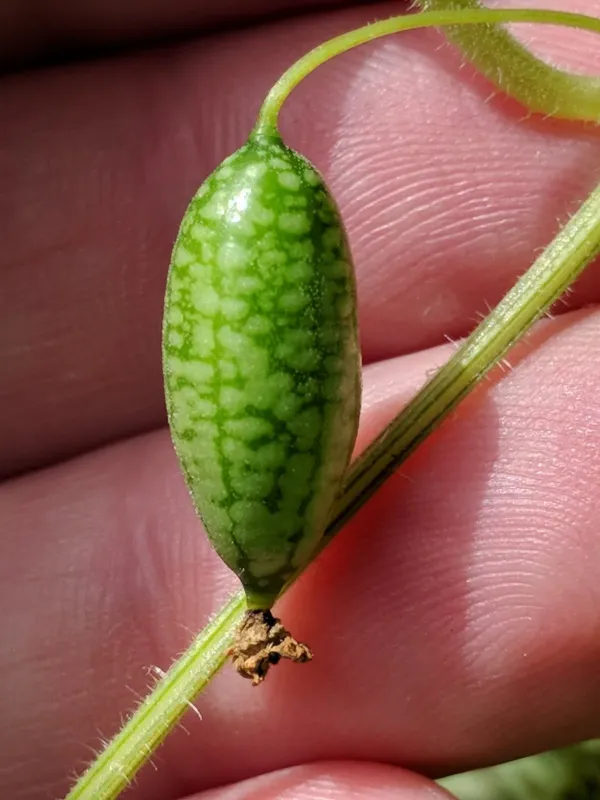
The fruit of the cucamelon is small, roughly 2–3 centimeters in size, resembling a tiny watermelon in appearance but tasting like a refreshing, citrusy cucumber.
These plants are remarkably prolific; a single vine can produce several kilograms of fruit over the course of a long, warm season, providing a constant harvest.
Beyond the fruit, the plant produces tuberous roots that are edible. In their native range, these tubers are harvested and consumed, often cooked or prepared similarly to potatoes.
The culinary use of cucamelons is versatile. They are frequently used fresh in salads, but are best known for their exceptional quality when pickled in vinegar.
Maximizing yield requires consistent harvesting, as picking the fruits frequently encourages the plant to put energy into developing new blooms and fruit sets.
Main diseases and pests
Common pests include aphids and spider mites, which can become problematic during hot and dry spells, particularly on the underside of the foliage.
Powdery mildew is the most prevalent fungal disease, characterized by white spots on the leaves. Good airflow and avoiding overhead watering can help mitigate this issue.
Root rot may occur in waterlogged soil conditions. Ensuring the site has excellent drainage and avoiding deep planting is crucial for overall plant health.
Monitoring the plants regularly allows for early detection of infestations. Eco-friendly soaps or neem oil can be used to manage outbreaks without harming beneficial insects.
- Prune overgrown vines to improve air circulation.
- Use drip irrigation to prevent wet leaves.
- Rotate crops annually to prevent soil-borne pathogens.
Harvesting
Harvesting should begin when the fruits are firm and reach their full size. Checking the plants every few days is necessary to catch the fruits at their prime stage.
Over-mature fruits can become slightly tough and develop larger seeds, which may slightly alter the intended crisp texture preferred by most consumers.
Because the fruits are small and delicate, they should be gathered carefully to avoid bruising. They have a short shelf life and are best consumed within a few days of harvesting.
The harvest season for cucamelon lasts until the first frost kills the vines. As temperatures drop, the fruit production will naturally taper off.
Tubers are typically harvested at the end of the season after the foliage has died back, providing an additional harvest for those interested in the plant's unique roots.